






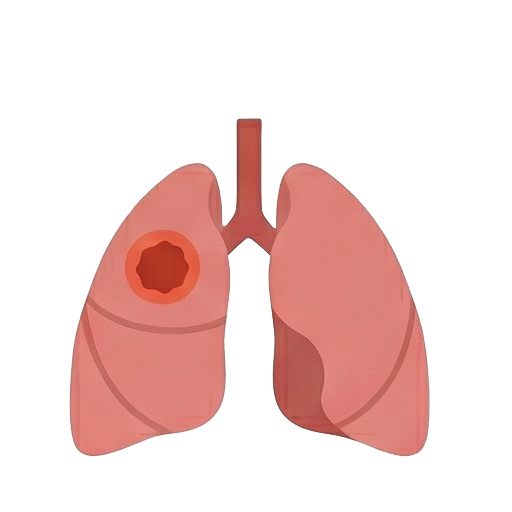
Lung Cancer is the most common cancer and the leading cause of cancer-related deaths in Hong Kong. It occurs when cells in the tissues of the lungs undergo genetic mutations, lose control over normal growth, and multiply abnormally to form a malignant tumor. The lungs’ primary function is gas exchange; once invaded by cancer cells, the patient’s respiratory function and overall health are severely compromised.
Traditionally, lung cancer has been viewed exclusively as a “smoker’s disease.” However, clinical data in Hong Kong and Asia reveal an increasing incidence among female non-smokers, which is primarily linked to specific genetic mutations. With the popularization of Low-Dose Computed Tomography (LDCT) and the advancement of precision medicine (targeted and immunotherapies), the cure rate for early-stage lung cancer has significantly improved, and the survival rate for advanced stages has been drastically extended.
1. Main Types of Lung Cancer
Medically, lung cancer is not a single disease. It is broadly classified into two main types based on the appearance of the cancer cells under a microscope, which directly determines the treatment approach:
- Non-Small Cell Lung Cancer (NSCLC): Accounts for about 80% to 85% of all lung cancer cases. It generally grows at a slower rate. It can be further subdivided into:
– Adenocarcinoma: The most common subtype, often forming on the outer areas of the lungs. It is also the most common type found in non-smokers and women.
– Squamous Cell Carcinoma: Closely linked to smoking and often arises in or near the main airways (bronchi).
– Large Cell Carcinoma: Tends to grow and spread more quickly. - Small Cell Lung Cancer (SCLC): Accounts for about 15% of cases and is almost exclusively associated with heavy smoking. It is highly aggressive, grows rapidly, and tends to spread early, though it often responds initially well to chemotherapy and radiation.
2. Causes and Risk Factors
- Smoking and Secondhand Smoke: Tobacco smoking is the single greatest risk factor. Tobacco smoke contains numerous carcinogens. Long-term exposure to secondhand smoke also significantly increases risk.
- Genetic Mutations: A high percentage of Asian non-smokers with adenocarcinoma possess specific genetic mutations (such as EGFR, ALK, ROS1). These are somatic mutations (acquired during a person’s lifetime), not inherited.
- Environmental and Occupational Exposure: Prolonged exposure to asbestos, radon gas (a naturally occurring radioactive gas), uranium, beryllium, and other chemicals.
- Air Pollution: Long-term exposure to high levels of outdoor air pollution (like PM2.5) or indoor cooking fumes.
- Personal and Family History: Having an immediate family member with lung cancer, or a personal history of lung diseases (like tuberculosis or pulmonary fibrosis) that causes lung scarring.
3. Common Warning Symptoms
The inside of the lungs lacks pain receptors, so early-stage lung cancer often presents no symptoms and is frequently discovered during routine health checks. As the tumor grows or presses on nearby tissues, the following signs may appear:
- Persistent Cough: A cough that lasts for more than three weeks and does not go away, or gets worse over time.
- Hemoptysis: Coughing up blood or blood-stained sputum.
- Shortness of Breath: Caused by the tumor blocking an airway or fluid accumulation in the chest (pleural effusion).
- Chest Pain: Dull aching or sharp pain that worsens with deep breathing, coughing, or laughing.
- Hoarseness: Caused by the tumor pressing on the nerve controlling the vocal cords.
- Advanced Metastatic Symptoms: Unexplained significant weight loss, loss of appetite, bone pain (if spread to bones), or headaches/seizures (if spread to the brain).
4. Professional Screening and Diagnosis
To accurately diagnose lung cancer and formulate the most effective treatment plan, doctors arrange a series of precise investigations:
- Low-Dose CT (LDCT): Recognized as the most effective screening tool for early lung cancer, capable of detecting tiny nodules invisible on standard X-rays.
- PET-CT Scan: Evaluates the metabolic activity of the tumor and accurately detects whether cancer cells have spread to lymph nodes or other organs.
- Bronchoscopy: A thin, flexible tube with a camera is passed through the mouth or nose into the lungs to observe lesions and take biopsies. Endobronchial Ultrasound (EBUS) allows for highly accurate sampling of mediastinal lymph nodes.
- Percutaneous Needle Biopsy: Using a CT scan for guidance, a fine needle is inserted through the chest wall to extract tissue from a lung mass.
- Molecular/Biomarker Testing (NGS): Once NSCLC is confirmed, the biopsy sample undergoes genomic sequencing to identify driver mutations. This is absolutely critical for determining eligibility for “Targeted Therapy.”
5. Modern Multidisciplinary Treatments
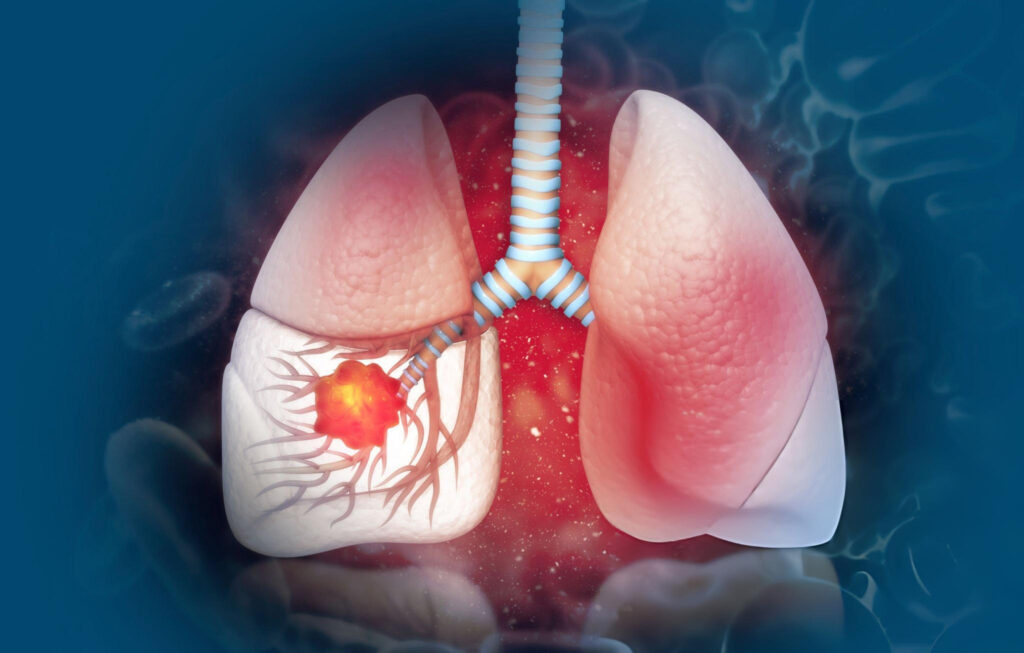
Lung cancer treatment has entered the era of “precision medicine.” Oncologists tailor treatments based on the cancer type, stage (I to IV), genetic profile, and the patient’s overall health:
1. Surgery
The primary option for Stage I, II, and some Stage III NSCLC. Modern procedures utilize Video-Assisted Thoracoscopic Surgery (VATS) or robotic-assisted techniques, offering smaller incisions and faster recovery. Procedures range from Lobectomy (removing an entire lung lobe) to Wedge Resections for very early-stage lesions.
2. Targeted Therapy
A game-changer for advanced lung cancer. If genetic testing reveals specific mutations (like EGFR or ALK), oral targeted drugs (TKIs) are prescribed. These act like “smart bombs” to block the growth signals of cancer cells, offering remarkable efficacy with fewer side effects than chemotherapy. It is the first-line treatment for advanced lung adenocarcinoma in Asian patients with these mutations.Recent clinical data indicate that for lung cancer patients with EGFR mutations, in addition to using oral targeted therapies, combining them with chemotherapy can also be considered to further enhance treatment efficacy.
3. Immunotherapy
Administered intravenously (e.g., PD-1/PD-L1 inhibitors), these drugs strip away the “disguise” cancer cells use to hide from the immune system, reactivating the patient’s own T-cells to attack the tumor. Given alone or combined with chemotherapy, it brings hope for long-term survival for many advanced-stage patients without specific genetic mutations.
4. Radiotherapy
Uses high-energy beams to kill cancer cells. For early-stage patients unfit for surgery, Stereotactic Ablative Radiotherapy (SABR) offers a highly precise, curative alternative. Radiation is also used palliatively to relieve pain from bone or brain metastases.
5. Chemotherapy
Systemic use of anti-cancer drugs to kill rapidly dividing cells. It remains a backbone for treating Small Cell Lung Cancer (SCLC) and is frequently used as an adjuvant (post-surgery to prevent recurrence) or foundational treatment for advanced NSCLC.
6. Prevention and Rehabilitation
Prevention is always better than cure. We strongly advise:
- Quit Smoking: The most effective preventative measure. Quitting at any age dramatically reduces your risk.
- Avoid Secondhand Smoke and Pollutants: Ensure good indoor ventilation and avoid prolonged exposure to cooking fumes.
- Screening for High-Risk Groups: Heavy smokers or those with a strong family history should consult doctors regarding Low-Dose CT (LDCT) screening.
- Post-Surgical Pulmonary Rehab: Patients recovering from lung surgery should practice guided deep breathing exercises to restore lung capacity and prevent pneumonia.