






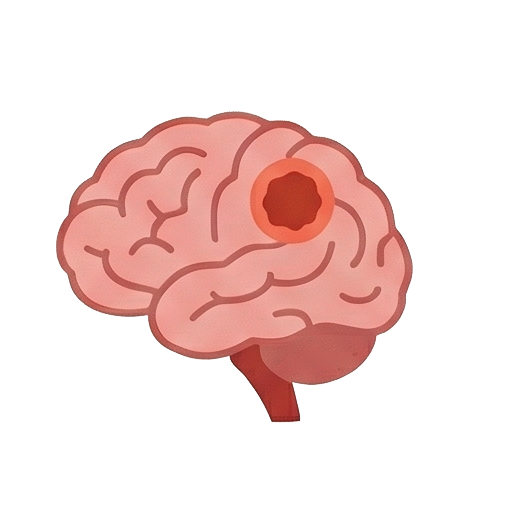
Brain Tumors refer to the abnormal growth and multiplication of cells within the brain. Unlike tumors in other parts of the body, the human skull is a rigid, enclosed space with fixed volume. Therefore, whether a brain tumor is classified as “benign” (non-cancerous) or “malignant” (cancerous), as it grows, it can increase intracranial pressure or press against critical neural pathways, posing a severe threat to a patient’s life and functional abilities.
Brain tumors are broadly categorized into two main types: Primary Brain Tumors (which originate from cells within the brain) and Secondary (Metastatic) Brain Tumors (which spread to the brain from cancers located elsewhere, such as the lungs or breasts). In adults, metastatic brain tumors are actually much more common than primary ones. Confronting a brain tumor can be daunting, but modern medicine—equipped with neuro-navigation systems and stereotactic radiosurgery—now allows for exceptionally precise treatments, significantly improving survival rates and quality of life.
1. Common Types of Primary Brain Tumors
Primary brain tumors are named based on the type of cells they originate from. Common types include:
- Gliomas: Originating from glial cells (the supportive tissue of the brain), these are the most common primary malignant brain tumors. They range from Grade I to IV. The Grade IV variant, known as Glioblastoma (GBM), is the most aggressive and fast-growing.
- Meningiomas: Originating from the meninges, the membranes that surround the brain and spinal cord. The vast majority (about 90%) are benign and slow-growing. They can often be cured through surgical removal.
- Pituitary Adenomas: Developing in the pituitary gland at the base of the brain. They are mostly benign but can cause hormonal imbalances or press against the optic nerves, affecting vision.
- Acoustic Neuromas (Schwannomas): Benign tumors growing on the nerve connecting the ear to the brain, leading to unilateral hearing loss, ringing in the ear (tinnitus), and balance issues.
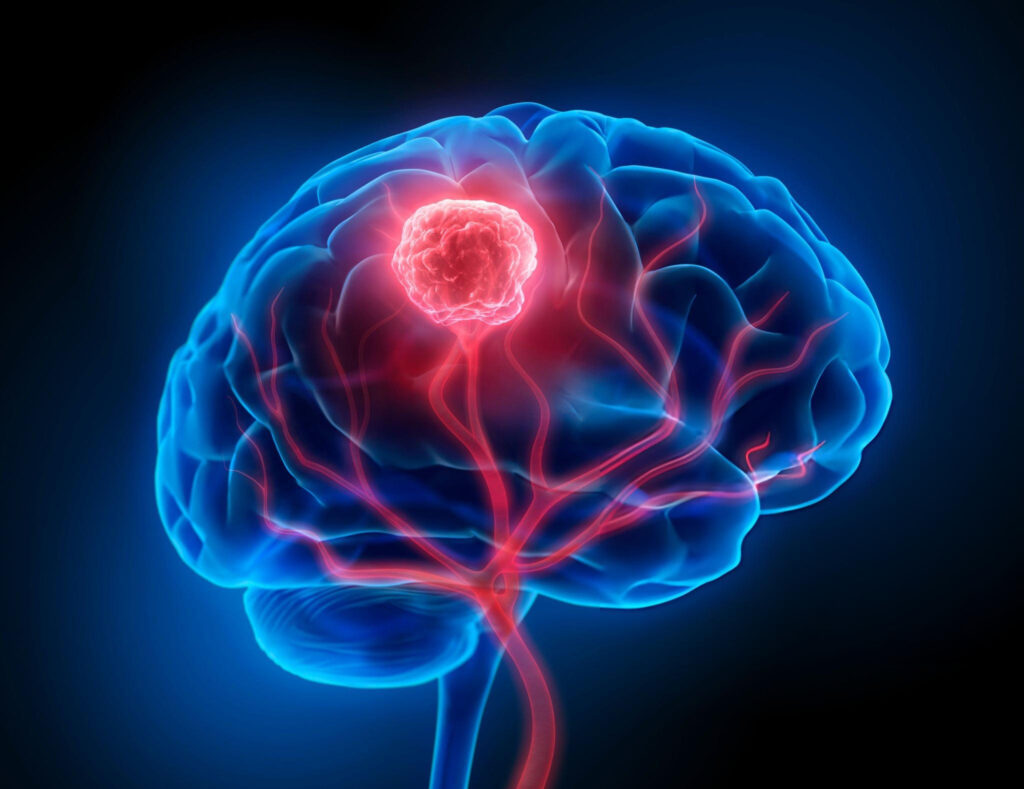
2. Causes and Risk Factors
The exact cause of most primary brain tumors remains unknown, but certain factors can increase the risk:
- Ionizing Radiation: High-dose radiation exposure to the head (e.g., radiotherapy for childhood leukemia) is the only definitively proven environmental risk factor.
- Family History and Genetic Syndromes: A very small percentage of brain tumors occur in individuals with specific inherited genetic syndromes, such as Neurofibromatosis or Li-Fraumeni syndrome.
- Age: The risk of developing most brain tumors increases with age, though certain types of gliomas are more prevalent in children and young adults.
- *The Cell Phone Myth: To date, there is no conclusive medical evidence linking the use of cell phones (which emit non-ionizing radiation) directly to the development of brain tumors.
3. Two Categories of Warning Symptoms
Symptoms heavily depend on the tumor’s “size” and “location” within the brain. They generally fall into two categories:
A. Symptoms of Increased Intracranial Pressure (General):
- Persistent Headaches: Often worse in the morning upon waking, and may worsen with coughing, sneezing, or exercising.
- Nausea and Vomiting: Unexplained, often occurring early in the morning and sometimes projectile.
- Seizures: Sudden onset of convulsions, twitching, or momentary loss of consciousness. This is frequently the first symptom that brings a patient to the doctor.
B. Localized Neurological Symptoms (Based on location):
- Unilateral weakness, numbness, or paralysis in the arms or legs, leading to balance issues or clumsiness.
- Speech difficulties (inability to express words or understand language), memory loss, or sudden shifts in personality and behavior.
- Vision changes (blurriness, double vision, loss of peripheral vision) or unilateral hearing loss.
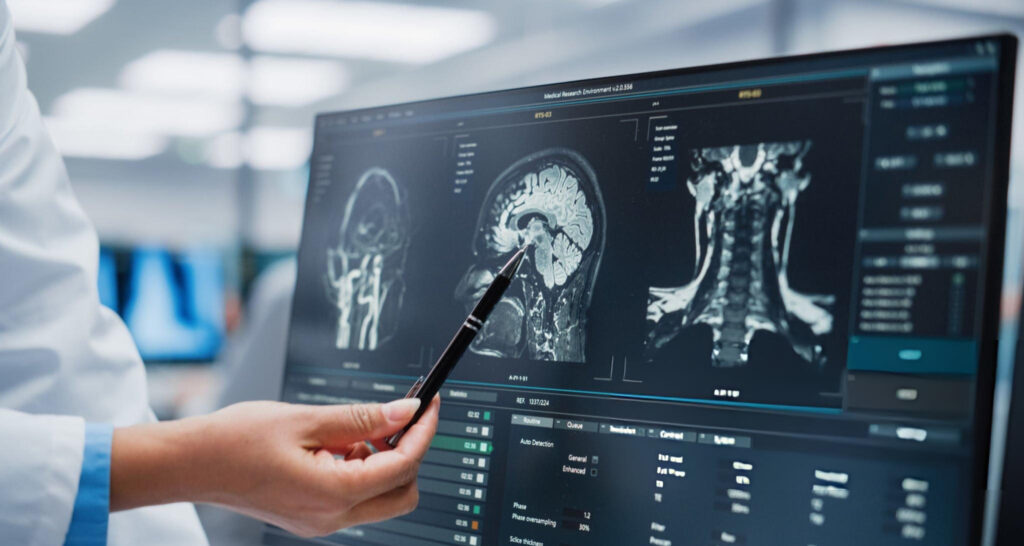
4. Professional Precision Diagnosis
Prompt and highly detailed imaging is crucial if a brain tumor is suspected:
- Neurological Exam: Doctors will test vision, hearing, balance, coordination, and reflexes to help pinpoint the affected area of the brain.
- Brain MRI (Magnetic Resonance Imaging): The gold standard for diagnosing brain tumors. With the use of intravenous contrast dye, MRIs provide incredibly detailed images of the brain’s soft tissues, revealing the exact size, location, and vascularity of the tumor.
- CT Scan: Often used in emergency settings to quickly rule out bleeding or hydrocephalus (fluid buildup), or to check for bone involvement.
- Biopsy: To determine the tumor’s grade and genetic mutations, a sample of tissue is removed—either during resection surgery or via a minimally invasive stereotactic needle biopsy—for pathological analysis.
5. Comprehensive Multidisciplinary Treatment
Treating brain tumors requires extreme precision and is managed by a team of neurosurgeons, medical oncologists, and radiation oncologists:
1. Microsurgery (Craniotomy)
Surgery is the primary treatment for most accessible brain tumors. The goal is “Maximum Safe Resection”—removing as much of the tumor as possible without damaging healthy brain tissue.
*Advanced Techniques: Surgeons use computer-assisted neuro-navigation (like a GPS for the brain). In critical cases, an “Awake Craniotomy” is performed. If the tumor is near the speech or motor areas, the patient is awakened during the tumor removal to perform tasks and speak, ensuring these vital functions are preserved in real-time.
2. Radiotherapy and Stereotactic Radiosurgery (SRS)
Crucial for tumors that cannot be fully removed, are in high-risk areas (like the brainstem), or for metastatic tumors.
– Stereotactic Radiosurgery (e.g., CyberKnife or Gamma Knife): Despite the name, no actual cutting is involved. It delivers highly focused, intense beams of radiation from multiple angles precisely converging on the tumor. This “burns” the tumor with sub-millimeter accuracy, sparing the surrounding healthy brain tissue.
3. Chemotherapy and Targeted Therapy
The brain is protected by the “Blood-Brain Barrier,” which blocks many drugs. However, certain chemotherapies (like oral Temozolomide) can cross this barrier and are the standard of care for malignant gliomas. If the tumor exhibits specific genetic mutations, targeted therapies may be used to block the tumor’s blood supply.
4. Tumor Treating Fields (TTFields)
An innovative, FDA-approved therapy specifically for the highly aggressive Glioblastoma (GBM). Patients wear a specialized, non-invasive cap consisting of transducer arrays on their scalp. The device continuously emits alternating electrical fields that disrupt the cancer cells’ ability to divide and multiply, significantly extending survival times.
6. Rehabilitation and Supportive Care
- Managing Brain Edema: Doctors frequently prescribe steroids (like Dexamethasone) to rapidly reduce swelling and fluid buildup around the tumor, providing fast relief from headaches and neurological deficits.
- Comprehensive Rehabilitation: Because brain damage can affect movement, speech, and daily functions, postoperative rehabilitation is vital. Physical therapy (to regain mobility), Occupational therapy (to relearn daily tasks), and Speech therapy (to improve communication and swallowing) play a critical role in helping patients return to a normal life.