







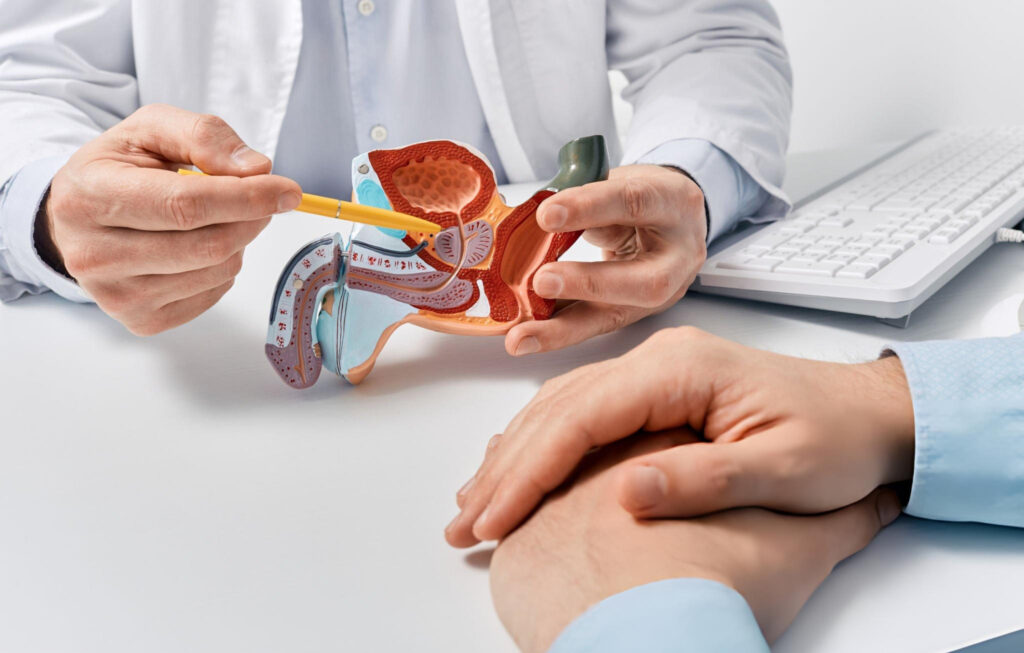
Prostate Cancer is one of the fastest-growing cancers in incidence among men in Hong Kong, currently ranking as the third most common male cancer. The prostate is a small, walnut-sized gland exclusive to men, located just below the bladder and in front of the rectum, surrounding the urethra. Its primary function is to produce seminal fluid that nourishes and transports sperm. Prostate cancer develops when cells within this gland mutate and multiply out of control, forming a malignant tumor.
Compared to other malignancies, most prostate cancers are relatively indolent and slow-growing; some may remain confined to the prostate gland for years without causing serious harm. However, certain aggressive types can grow rapidly and spread to the bones or lymph nodes. Therefore, accurate screening, assessing the tumor’s aggressiveness (Gleason Score), and formulating a personalized, stage-appropriate treatment strategy are critical.
1. Causes and Major Risk Factors
While the exact singular cause remains unknown, medical research has identified several significant risk factors:
- Age: Age is the most significant risk factor. Prostate cancer is rare in men under 50, and the majority of cases are diagnosed in men between the ages of 60 and 80.
- Family History and Genetics: Having a first-degree relative (father or brother) with prostate cancer more than doubles your risk. Additionally, men carrying inherited genetic mutations, such as BRCA1 or BRCA2 (genes also linked to female breast cancer), face a higher risk of developing aggressive prostate cancer.
- Diet and Obesity: Long-term consumption of high-calorie, high-fat diets—especially animal fats and red meat—coupled with a lack of high-fiber fruits and vegetables, may promote cancer growth. Severe obesity is also linked to a higher risk of advanced disease.
- Ethnicity: Statistics show that men of African descent have the highest incidence rates, followed by Caucasians. While historically lower in Asian men, rates are rapidly rising due to westernized lifestyles.
2. Early and Advanced Warning Symptoms
Early-stage prostate cancer typically presents no symptoms at all. As the tumor grows and presses against the urethra, it causes urinary issues that mimic those of a very common non-cancerous condition called Benign Prostatic Hyperplasia (BPH). Never ignore the following warning signs:
- Urinary Difficulties: A frequent need to urinate (especially at night), a sudden urge to rush to the toilet, or a burning sensation during urination.
- Weak Stream: Difficulty starting the urine stream, a weak or interrupted flow, or dribbling after finishing.
- Blood in Urine or Semen: Hematuria or hematospermia.
- Advanced Metastatic Symptoms: If the cancer spreads to the bones (its most common metastatic site), it can cause persistent, deep pain in the pelvis, lower back, spine, or hips. Severe spinal compression can lead to leg weakness or loss of bladder/bowel control.
3. Professional Screening and Precision Diagnosis
To detect prostate cancer early and accurately stage the disease, specialists utilize advanced diagnostic tools:
- PSA (Prostate-Specific Antigen) Blood Test: PSA is a protein produced by the prostate. Elevated levels may indicate cancer, but benign enlargement or inflammation can also raise PSA levels, requiring further investigation.
- Digital Rectal Exam (DRE): A doctor examines the prostate through the rectum using a gloved, lubricated finger to feel for hard nodules or unusual abnormalities.
- Multiparametric MRI (mpMRI): A crucial modern imaging tool. It provides highly detailed images of the prostate, identifying suspicious areas to guide targeted biopsies accurately and helping to prevent unnecessary biopsies.
- Prostate Biopsy: Using ultrasound or MRI guidance, tissue samples are extracted via the perineum or rectum. Pathologists analyze these cells to determine the Gleason Score; a higher score indicates a more aggressive, faster-growing cancer.
- PSMA PET-CT Scan: A cutting-edge imaging technique used primarily for high-risk or recurrent cases, offering unparalleled sensitivity in detecting microscopic prostate cancer metastases anywhere in the body.

4. Comprehensive Multidisciplinary Treatment Options
Treatment is highly individualized, depending on the stage, Gleason Score, the patient’s age, and overall health status:
1. Active Surveillance
For early-stage, slow-growing cancers with a low Gleason Score, immediate treatment may not be necessary. Active surveillance involves closely monitoring the cancer with regular PSA tests, DREs, and MRIs. Curative treatment is only initiated if tests show the cancer is progressing, thereby avoiding potential side effects of surgery or radiation (like incontinence or erectile dysfunction) for as long as possible.
2. Surgery: Radical Prostatectomy
The surgical removal of the entire prostate gland and some surrounding tissue, suitable for localized cancer. Today, Robotic-Assisted Laparoscopic Prostatectomy (using the Da Vinci system) is the gold standard. High-definition 3D cameras and precise robotic arms allow surgeons to meticulously remove the cancer while maximizing the preservation of the delicate nerves controlling erections and the sphincter controlling urinary continence.
3. Radiotherapy
Uses high-energy rays to kill cancer cells. It can be used as a primary curative treatment (with success rates comparable to surgery) or post-operatively to eliminate residual cancer. Options include External Beam Radiation Therapy (EBRT) and Brachytherapy (implanting radioactive seeds directly into the prostate).
4. Hormone Therapy (Androgen Deprivation Therapy – ADT)
Prostate cancer cells rely on male hormones (testosterone) to grow. ADT uses medications to drastically reduce testosterone levels in the body, effectively “starving” the cancer cells and shrinking the tumor. It is often combined with radiotherapy or used as the frontline treatment for advanced, metastatic disease.
5. Chemotherapy, Targeted Therapy, and Radioligand Therapy
When advanced cancer becomes resistant to hormone therapy, chemotherapy is utilized. For patients with specific genetic profiles (e.g., BRCA mutations), targeted drugs like PARP inhibitors offer new avenues. Recently, Lutetium-177 PSMA Radioligand Therapy has emerged as a groundbreaking treatment for advanced cases, delivering targeted radiation specifically to prostate cancer cells throughout the body while sparing healthy tissues.
5. Post-Treatment Care and Lifestyle Modifications
- Healthy Diet: Adopt a Mediterranean-style diet. Increase the intake of cooked tomatoes (rich in lycopene), cruciferous vegetables, and soy products, while minimizing red meat and high-fat dairy.
- Pelvic Floor Exercises: Patients recovering from surgery or radiation are highly encouraged to practice “Kegel exercises” under the guidance of a physiotherapist to strengthen urinary control muscles and accelerate recovery from temporary incontinence.
- Ongoing PSA Monitoring: Even after successful curative treatment, regular PSA blood tests remain essential for the rest of the patient’s life to monitor for any signs of recurrence.