



Prepare You and Your Partner for Family Planning
Carriers of recessive genetic disorders usually have no symptoms, but if both partners carry variants related to the same condition, their child may have an increased risk of being affected. Screening helps couples preparing for pregnancy understand risk earlier and plan prenatal or postnatal care.

Why Consider Carrier Screening?
The material notes that around 1 in every 2 Chinese individuals is a carrier of one or more recessive genetic disorders. International guidelines recommend carrier screening for women who are considering pregnancy or already pregnant.
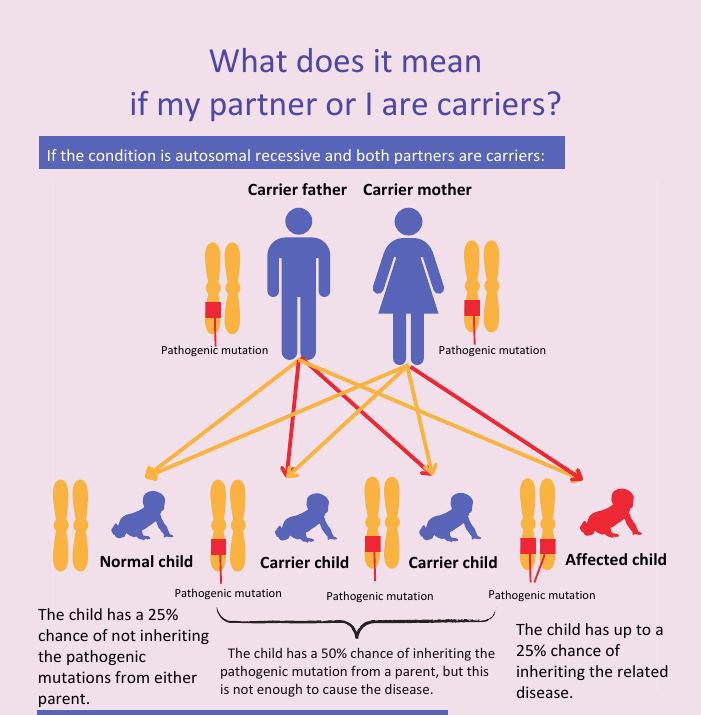
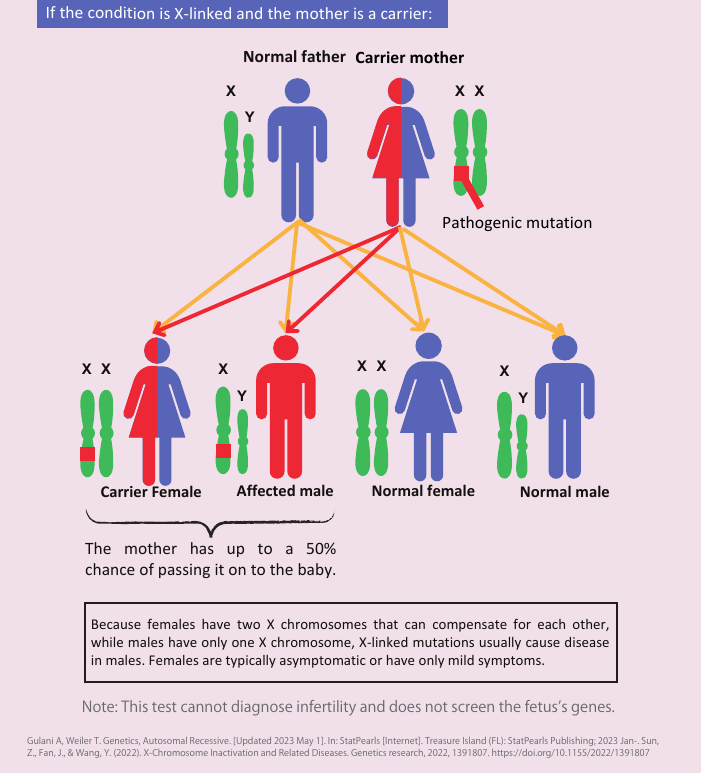
If a condition is autosomal recessive and both partners are carriers, each pregnancy may have a 25% chance of an affected child and a 50% chance of a carrier child. For X-linked conditions, when the mother is a carrier, sons are more likely to be affected.
What the Screening Covers
The test includes 587 genes associated with autosomal recessive and X-linked disorders, including conditions more common among Chinese populations such as thalassemia, hereditary hearing loss, spinal muscular atrophy, fragile X syndrome, severe syndromes and more than 80 treatable congenital metabolic disorders.
The test uses NGS technology to provide comprehensive carrier risk information. It does not diagnose infertility and does not test fetal genes.
Who Should Consider It?
Couples planning to have children: understand the risk of passing different genetic disorders to the next generation. Couples with a family history of genetic disease: understand inherited family risk. Couples considering assisted reproduction or preimplantation genetic testing: assess whether further reproductive planning may be needed. Women who are pregnant or preparing for pregnancy: obtain risk information earlier.
Purpose of the Results
Results may help plan prenatal testing and postnatal care for the baby, support IVF and preimplantation genetic testing decisions, and help couples discuss whether assisted reproductive technologies are needed.
Testing Accuracy
Technical information indicates 99.9% accuracy for DNA sequencing, >99% accuracy for SNP and indel variant calling, and 100% variant annotation, with external quality assurance through GenQA / UK NEQAS. Variant classification may change as medical knowledge develops, and not all variants are necessarily included in the report.
Enquiry and Booking
If you are planning pregnancy, have a family history of genetic disease, or are considering assisted reproduction, contact Well Clinic for enquiry.
Contact Us
WhatsApp / WeChat: +852 5292 0089
Address: Room B, 24/F, Lee Tung Building, 9 Li Yuen Street East, Central, Hong Kong