






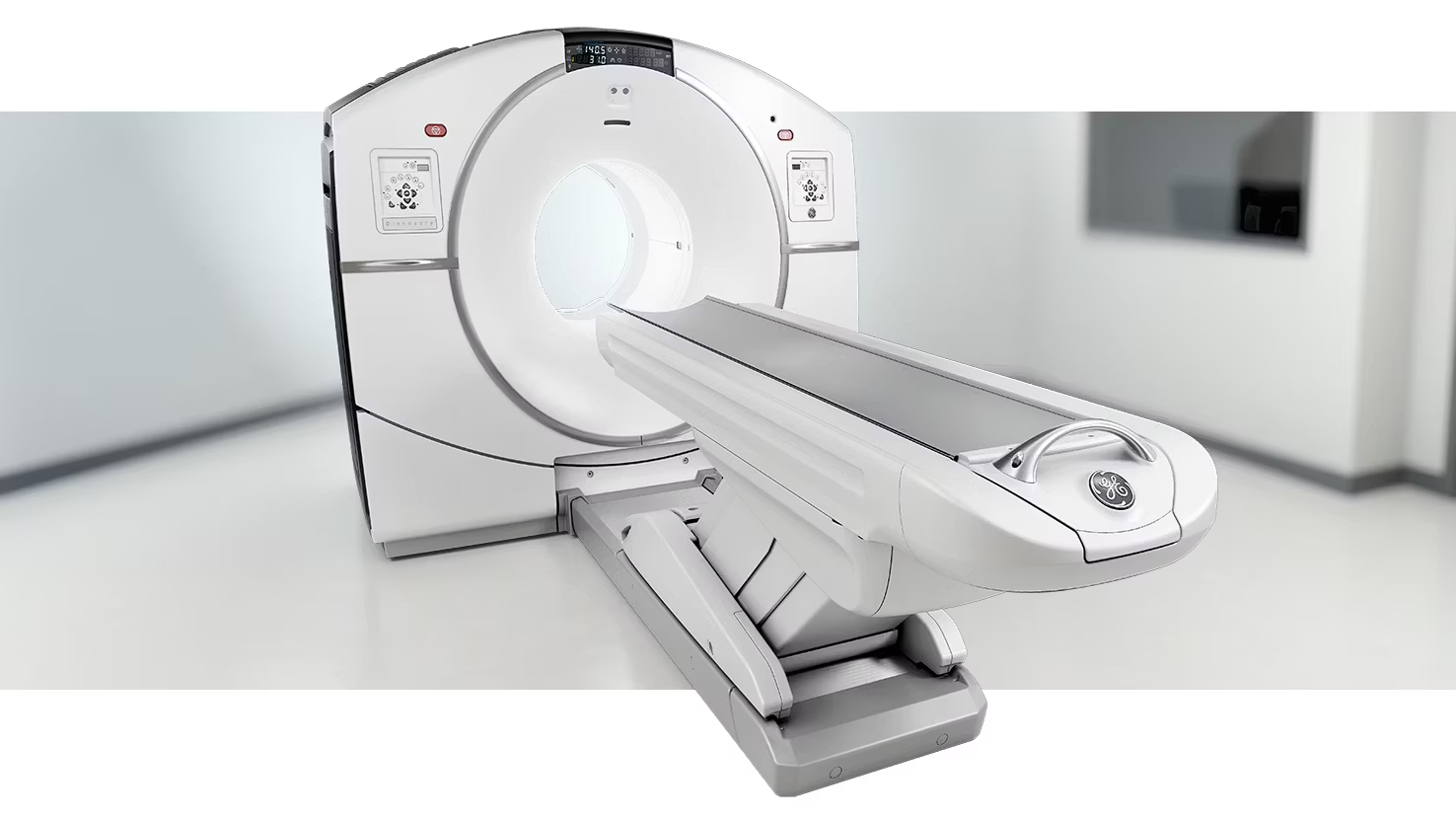
What is a PET-CT Scan?
Positron Emission Tomography-Computed Tomography (PET-CT) is one of the most advanced medical imaging technologies available today. It seamlessly combines the functional imaging of a PET scan with the precise anatomical detail of a CT scan in a single machine. While the CT provides a clear structural map of internal organs, the PET scan detects the metabolic activity of cells, allowing doctors to pinpoint areas of abnormal cellular activity with exceptional accuracy.
Before the scan, a small amount of a radioactive tracer (most commonly FDG, a form of glucose) is injected into the body. Because cancer cells grow rapidly and consume much more glucose than normal cells, they absorb high amounts of the tracer. These areas appear as bright “hot spots” on the PET-CT images, making it an invaluable tool for early cancer detection and precise localization.
Clinical Applications & Diagnosis:
- Oncology & Cancer Detection: Effectively distinguishes between benign and malignant tumors and helps locate primary cancer sites.
- Cancer Staging: Accurately determines if cancer has spread or metastasized to lymph nodes or other organs, which is crucial for planning treatments (e.g., surgery, chemotherapy, radiotherapy).
- Monitoring Treatment Response: Evaluates tumor activity during or after treatment to confirm its effectiveness and detect any early signs of cancer recurrence.
- Neurology: Assesses metabolic abnormalities in specific brain regions, aiding in the early diagnosis of Alzheimer’s disease, Parkinson’s disease, and locating epileptic foci.
- Cardiology: Evaluates myocardial viability (living heart muscle tissue) to help cardiologists determine if a patient is suitable for coronary bypass surgery or angioplasty.
PET-CT Scan Procedure:
- Our medical staff will first measure your height, weight, and test your blood sugar level.
- A small amount of radioactive tracer (e.g., FDG) will be administered via an intravenous (IV) injection.
- Following the injection, you will rest quietly in a dimmed, private room for about 45 to 60 minutes. Reading or using a mobile phone is not allowed, as you must remain completely relaxed to allow the tracer to distribute throughout your body.
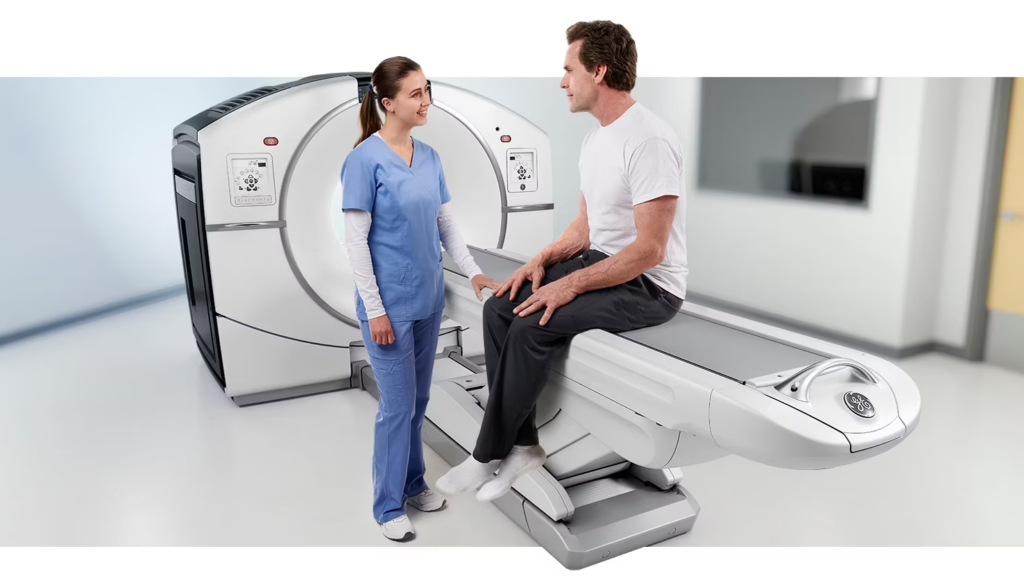
- After the resting period, you will enter the scanning room for a whole-body scan taking approximately 20 to 30 minutes.
Important Pre-examination Precautions:
- Strict Fasting: You must fast for at least 6 hours before the scan (only plain, unflavored water is allowed) to ensure a low baseline blood sugar level.
- Diet & Exercise: Avoid strenuous exercise the day before the exam, and a low-carbohydrate diet is highly recommended.
- Diabetic Patients: Since blood sugar levels directly affect image accuracy, diabetic patients must inform us during booking. We will provide specific instructions regarding your medication and fasting schedule.
- Pregnancy & Breastfeeding: This scan is not suitable for pregnant women. If you are breastfeeding, please inform our staff in advance for special arrangements.
Does a PET-CT scan involve radiation? Is it safe?
Yes, a PET-CT involves radiation from both the injected tracer and the CT scan. However, we use strict, medical-grade safety doses. The radioactive tracer has a very short half-life and decays quickly. Under professional supervision, the immense clinical benefits of a precise diagnosis far outweigh the minimal radiation risks.
Are there any side effects from the injected tracer (FDG)?
FDG is structurally very similar to the natural glucose your body consumes daily, making allergic reactions or side effects extremely rare. Drinking plenty of water and urinating frequently after the exam will help flush the remaining tracer from your system, usually within a day.
Why is strict blood sugar control required before the scan?
PET-CT relies heavily on cellular absorption of glucose (the FDG tracer). If your blood sugar is too high before the scan, the natural glucose in your blood will compete with the tracer to enter the cells. This can reduce the tracer uptake in tumors, resulting in blurry images or potential misdiagnosis.
How long does the entire PET-CT process take?
While the actual scanning time in the machine is only 20 to 30 minutes, you should expect to spend about 2 to 3 hours at the clinic. This accounts for registration, blood sugar testing, the injection, the 1-hour resting period for tracer uptake, and the scan itself.
Can I have contact with pregnant women or children after the scan?
For precautionary safety, although the residual radiation in your body is very low and decreases rapidly, we advise avoiding close or prolonged contact with pregnant women and infants for about 8 to 12 hours following the completion of your scan.