






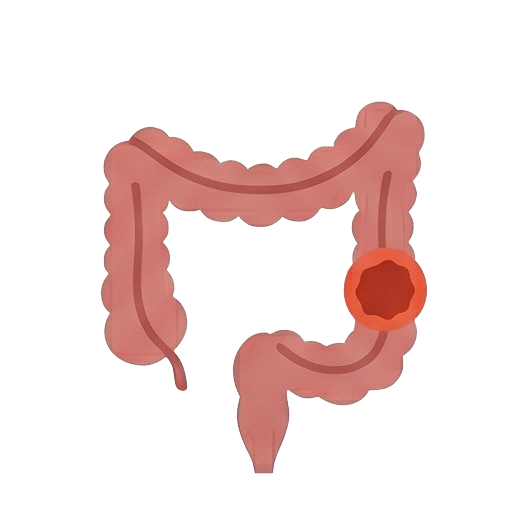
Colorectal Cancer (Bowel Cancer) is highly prevalent in Hong Kong, currently ranking as one of the most common and the second deadliest cancers in the region. The large intestine is the final part of the digestive tract, consisting of the colon and the rectum. The vast majority of colorectal cancers begin as benign growths on the inner lining of the intestine called “adenomatous polyps.” Over several years, these polyps can accumulate genetic mutations and slowly transform into malignant tumors.
With the increasing Westernization of diets in Hong Kong, the incidence of colorectal cancer remains high and is increasingly affecting younger demographics. However, colorectal cancer is unique because it is highly preventable through screening. By identifying and removing pre-cancerous polyps, the disease can be stopped before it starts. Furthermore, when caught in its early stages, the survival rate is exceptionally high, with a 5-year survival rate exceeding 90% for Stage I.
1. Causes and High-Risk Factors
The development of colorectal cancer is closely tied to lifestyle and dietary habits. The following factors significantly increase the risk:
- Age: Most cases occur in individuals over 50, though the incidence in adults under 50 has been steadily rising.
- Dietary Habits: A diet high in red meats (beef, pork, lamb) and processed meats (sausages, bacon, ham), combined with a low intake of dietary fiber (vegetables, fruits, whole grains).
- Lack of Exercise and Obesity: Being overweight and leading a sedentary lifestyle slows bowel motility, increasing the time cancer-causing agents remain in contact with the bowel lining.
- Personal and Family History: Having first-degree relatives with colorectal cancer or polyps. Inherited genetic syndromes, such as Familial Adenomatous Polyposis (FAP) or Lynch Syndrome, carry a very high risk.
- Inflammatory Bowel Disease (IBD): Chronic conditions like Ulcerative Colitis or Crohn’s Disease.
- Smoking and Alcohol: Heavy smoking and excessive alcohol consumption are linked to a higher risk of developing polyps and cancer.
2. Early and Advanced Symptoms
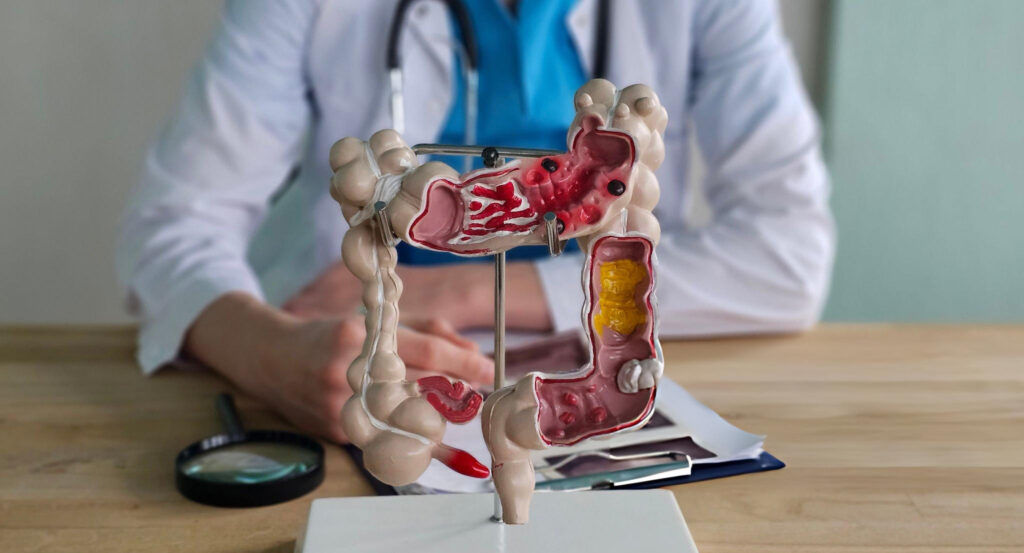
Colorectal cancer often causes no symptoms in its early stages. As the tumor grows and disrupts bowel function, warning signs may appear, varying depending on whether the tumor is in the right or left side of the colon:
- Change in Bowel Habits: Persistent diarrhea, constipation, or alternating between the two, lasting for more than two weeks.
- Blood in Stool: Bright red blood often indicates a tumor in the rectum or left colon; a tumor in the right colon may cause dark, tarry, or black stools due to older blood.
- Change in Stool Caliber: Stools becoming narrower than usual (pencil-thin) due to partial obstruction by the tumor.
- Tenesmus: A persistent feeling that you need to pass stool, even after having done so (incomplete emptying).
- Abdominal Discomfort: Frequent gas pains, cramps, bloating, or unexplained abdominal pain.
- Systemic Symptoms: Unexplained anemia (causing fatigue and weakness) or unintentional weight loss.
3. Professional Screening and Diagnosis
To accurately diagnose colorectal cancer and determine its stage, doctors utilize the following tests:
- Fecal Immunochemical Test (FIT): A simple, non-invasive stool test that detects microscopic traces of hidden blood.
- Colonoscopy: The gold standard for diagnosis. The doctor can visualize the entire colon lining. If polyps are found, they can be removed immediately (preventing cancer); if a suspicious mass is found, a biopsy is taken for pathology.
- Blood Tests (CEA): Measures Carcinoembryonic Antigen (CEA) levels. It is mainly used to monitor response to treatment or detect recurrence, rather than as a primary diagnostic tool.
- Imaging Scans (CT / MRI / PET-CT): Once confirmed, scans of the chest, abdomen, and pelvis are conducted to check if the cancer has spread to lymph nodes, the liver, or the lungs, determining the Stage (I to IV).
4. Comprehensive Multidisciplinary Treatment
The treatment plan depends heavily on the tumor’s location (colon vs. rectum), stage, and the patient’s health, often combining surgical and medical oncology:
1. Surgery
Surgery is the primary curative treatment for early-stage disease. Modern procedures utilize minimally invasive laparoscopic or robotic-assisted surgery to remove the cancerous section of the bowel along with nearby lymph nodes, followed by reattaching the healthy ends.
*The “Stoma” Myth: Many patients fear needing a permanent colostomy bag. In reality, a permanent stoma is only required if the tumor is extremely close to the anus. For most colon cancers and upper rectal cancers, a stoma is either not needed at all or is only temporary to allow the bowel to heal before being reversed.
2. Chemotherapy
Uses drugs to destroy circulating cancer cells.
– Adjuvant Chemotherapy: Given after surgery for Stage III or high-risk Stage II patients to eradicate microscopic remnants and reduce recurrence risk.
– Palliative Chemotherapy: Used for advanced metastatic disease to control growth, relieve symptoms, and extend survival.
3. Radiotherapy
Radiation is rarely used for colon cancer but is a crucial component for “Rectal Cancer.” Because the rectum is situated in the narrow pelvic cavity, surgery can be challenging. Doctors often recommend “Neoadjuvant Chemoradiation” before surgery to shrink the rectal tumor, increasing the chances of complete removal and sphincter preservation (avoiding a permanent stoma).
4. Targeted Therapy
Primarily used for Stage IV (metastatic) colorectal cancer, usually in combination with chemotherapy. The tumor undergoes molecular profiling (e.g., testing for KRAS, NRAS, BRAF mutations) to select the right drug. The main types are Anti-VEGF (starves the tumor of blood supply) and Anti-EGFR (blocks growth signals).
5. Immunotherapy
Immunotherapy has revolutionized treatment for a specific subset of advanced colorectal cancer patients. If the tumor tests positive for the biomarkers MSI-H (High Microsatellite Instability) or dMMR (Mismatch Repair Deficiency)—which account for about 5% of metastatic cases—immunotherapy can effectively unleash the body’s immune system to attack the cancer, often yielding durable responses.
5. Prevention and Rehabilitation
- Screening is Key: Individuals aged 50 and above (or 40 if there is a strong family history) should undergo regular FIT or Colonoscopy screenings.
- High-Fiber Diet: Consume plenty of vegetables, fruits, and whole grains to promote regular bowel movements. Limit red and processed meats.
- Stoma Care: If a stoma is necessary, specialized stoma nurses will guide the patient on care. Modern stoma appliances are discreet, odor-proof, and leak-proof, allowing patients to confidently return to normal social lives, work, and even swimming.