




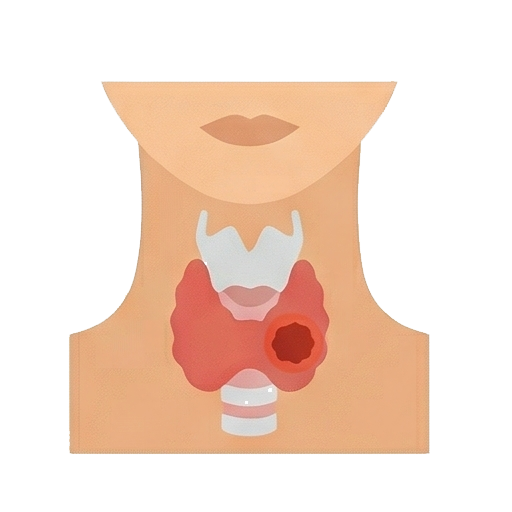
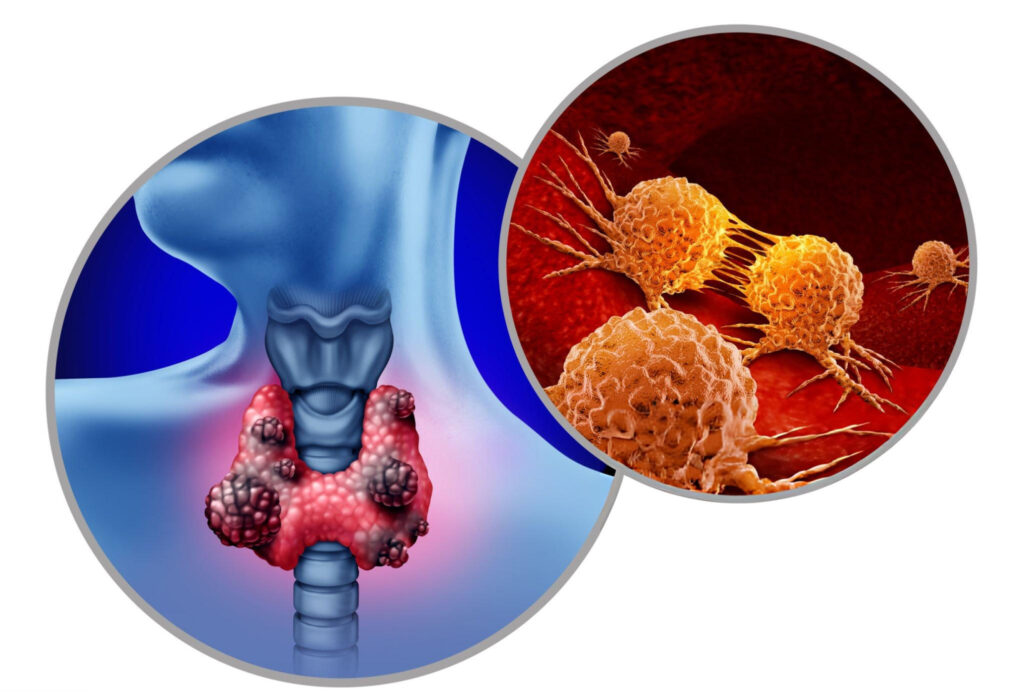
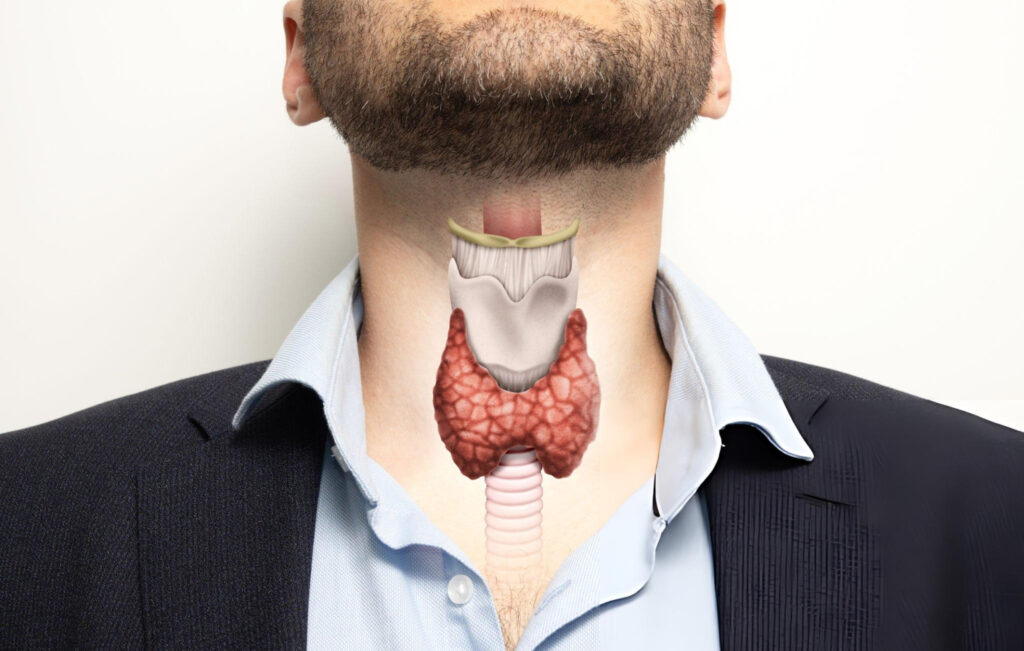
Thyroid Cancer is one of the top ten most common cancers in Hong Kong, and its incidence has been rising steadily in recent years. The thyroid is a small, butterfly-shaped endocrine gland located at the base of the front of the neck, wrapping around the windpipe (trachea). Its primary function is to produce thyroid hormones that regulate the body’s metabolism, heart rate, and body temperature. Cancer develops when cells in the thyroid undergo genetic mutations and multiply uncontrollably.
Fortunately, the vast majority of thyroid cancers are extremely slow-growing. With early detection and standard treatment, it is considered one of the most highly curable cancers, with a 10-year survival rate often exceeding 90% for early-stage patients. Additionally, thyroid cancer shows a significant gender disparity: women are three to four times more likely to develop the disease than men, and it is most frequently diagnosed in young to middle-aged women between 30 and 50 years old.
1. The Four Main Types of Thyroid Cancer
Thyroid cancer is not a single disease. Based on the microscopic appearance of the cells, it is classified into four main types, each with different behaviors and treatment protocols:
- Papillary Thyroid Cancer: The most common type, accounting for 80% to 85% of all cases. It grows very slowly and commonly spreads to lymph nodes in the neck. It has the best prognosis and is highly curable.
- Follicular Thyroid Cancer: Accounts for 10% to 15% of cases. It is less likely to spread to lymph nodes but has a higher tendency to spread through the bloodstream to the lungs or bones. The overall prognosis remains very good.
- Medullary Thyroid Cancer (MTC): A rare type (2% to 3%) that originates from the C-cells, which produce the hormone calcitonin. A significant portion of these cases is linked to inherited genetic syndromes (MEN2 mutation).
- Anaplastic Thyroid Cancer: Extremely rare (less than 2%) but is one of the most aggressive and malignant tumors in humans. It mostly affects older adults, grows rapidly, spreads quickly, and responds poorly to traditional treatments.
2. Causes and Risk Factors
- Radiation Exposure: Exposure to high levels of radiation to the head and neck during childhood or puberty (e.g., medical treatments for other conditions) is the most proven environmental risk factor.
- Gender and Age: Women face a significantly higher risk, with peak diagnosis occurring between ages 30 and 50.
- Family History and Genetics: Having a first-degree relative with thyroid cancer increases the risk.
- Dietary Iodine Variations: A diet severely deficient in iodine or excessively high in iodine may contribute to thyroid conditions.
- Benign Thyroid Conditions: A history of multi-nodular goiter (enlarged thyroid) or benign thyroid nodules.
3. Common Warning Symptoms
Early-stage thyroid cancer typically causes no pain or symptoms. It is most frequently discovered when a patient feels a lump in the neck or during a routine ultrasound check-up. As the tumor grows, it may press on nearby structures, causing:
- A Painless Neck Lump: A firm nodule in the front of the neck that moves up and down when you swallow.
- Hoarseness: Persistent voice changes caused by the tumor invading the recurrent laryngeal nerve (which controls the vocal cords).
- Difficulty Swallowing or Breathing: Feeling like something is caught in your throat, caused by the tumor pressing against the esophagus or trachea.
- Persistent Cough: A chronic cough not associated with a cold.
- Swollen Lymph Nodes: Enlarged, painless lymph nodes on the sides of the neck.
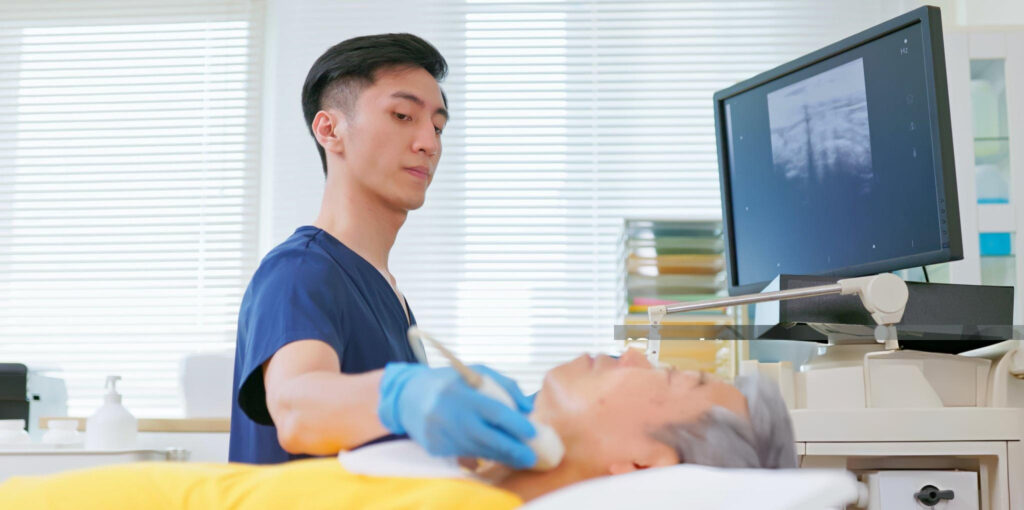
4. Professional Screening and Diagnosis
Finding a thyroid nodule does not mean you have cancer (the vast majority of nodules are benign). Specialists use the following tools to confirm a diagnosis:
- Thyroid Ultrasound: The most crucial, radiation-free first step. It accurately determines the size, solid/cystic nature, borders, and presence of microcalcifications (signs of malignancy) in a nodule.
- Fine Needle Aspiration (FNA) Biopsy: The gold standard for diagnosis. Under ultrasound guidance, a very thin needle extracts cells from the nodule for microscopic examination. It is highly accurate and performed without general anesthesia.
- Blood Tests: To check thyroid function (TSH) and, more importantly post-surgery, to monitor the tumor marker Thyroglobulin (Tg) for any signs of cancer recurrence.
5. Comprehensive Multidisciplinary Treatment Options
The treatment success rate for thyroid cancer is exceptionally high. The standard protocol for common types often involves a “trio” of therapies: Surgery, Radioactive Iodine, and Hormone Suppression.
1. Surgical Removal (Thyroidectomy)
Surgery is the primary and most important curative step. Depending on tumor size and spread, the surgeon will remove half of the thyroid (lobectomy) or the entire gland (total thyroidectomy), along with affected lymph nodes.
*Modern Tech: Surgeons now frequently use Intraoperative Neuromonitoring (IONM) to identify and preserve the delicate recurrent laryngeal nerve, significantly reducing the risk of postoperative vocal cord paralysis (loss of voice).
2. Radioactive Iodine Therapy (RAI / I-131)
A unique and highly effective targeted treatment for Papillary and Follicular cancers. Because only thyroid cells absorb iodine, patients swallow a pill or liquid containing radioactive iodine. This substance travels through the bloodstream and is absorbed exclusively by any microscopic remnant thyroid tissue or cancer cells, destroying them from the inside out with minimal damage to the rest of the body. Patients require brief isolation in a specialized room due to the radiation emitted.
3. Thyroid Hormone Suppression Therapy
After a total thyroidectomy, patients must take a daily synthetic thyroid hormone pill (Levothyroxine) for life. This serves two purposes: replacing the essential hormones the body needs, and intentionally suppressing the pituitary gland’s TSH (Thyroid Stimulating Hormone). By keeping TSH levels extremely low, any remaining microscopic cancer cells are “suppressed” and deprived of the signal they need to grow, drastically preventing recurrence.
4. Targeted Therapy and External Radiation (For Advanced Cases)
For advanced cancers that do not respond to Radioactive Iodine, or for the aggressive Anaplastic type, oncologists utilize oral Targeted Therapies (Tyrosine Kinase Inhibitors) to block cancer growth signals and blood vessel formation. External beam radiation may also be used for pain control or aggressive local disease.
6. Post-Treatment Care and Lifestyle
- Medication Compliance: Taking the daily thyroid hormone replacement pill consistently on an empty stomach every morning is the most critical lifelong habit for patients.
- Low-Iodine Diet Preparation: One to two weeks prior to receiving Radioactive Iodine (RAI) therapy, patients must strictly adhere to a “low-iodine diet” (avoiding seafood, seaweed, iodized salt, and dairy). This “starves” any remaining cancer cells of iodine, making them highly “hungry” and maximizing their uptake of the radioactive dose.
- Regular Follow-ups: With routine blood tests (measuring Tg levels) and neck ultrasounds to monitor for recurrence, the vast majority of thyroid cancer survivors go on to live completely normal, healthy lives.
Lorem ipsum dolor sit amet, consectetur adipiscing elit. Ut elit tellus, luctus nec ullamcorper mattis, pulvinar dapibus leo.