






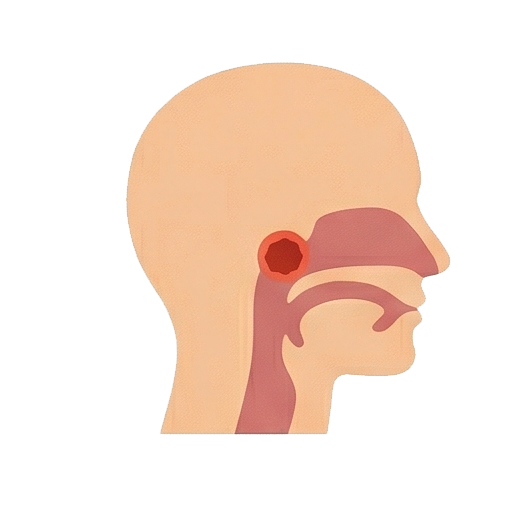
Nasopharyngeal Carcinoma (NPC) is a type of cancer that occurs in the nasopharynx, which is the upper part of the throat situated directly behind the nasal cavity. The nasopharynx is a deep, hidden area surrounded by critical cranial nerves and major blood vessels. While extremely rare in Western countries, NPC is highly prevalent in Southern China (including Guangdong, Guangxi, and Hong Kong), earning it the moniker “Canton Cancer” in the global medical community.
Unlike many cancers that primarily affect the elderly, NPC often strikes a younger demographic, with a peak incidence between the ages of 40 and 60. Men are about three times more likely to develop NPC than women. Because of its concealed location, early-stage tumors are difficult to detect, and patients often only seek medical advice when they feel a lump in their neck after the cancer has spread to lymph nodes. Fortunately, NPC is highly sensitive to radiation therapy, making the cure rate for early-stage patients very high.
1. Causes and Major Risk Factors
The development of NPC is unique and is widely believed by the medical community to be caused by an interplay of three main factors:
- Epstein-Barr Virus (EBV) Infection: This is the most crucial trigger. While the vast majority of people in Hong Kong have been exposed to EBV (which usually causes mild cold-like symptoms and remains dormant), in a small fraction of individuals, the virus triggers genetic mutations in the cells of the nasopharynx.
- Genetics and Family History: Genetics play a powerful role. Having a first-degree relative (parent or sibling) with NPC multiplies the risk of developing the disease several-fold compared to the general population.
- Traditional Dietary Habits: Long-term consumption of nitrate-rich preserved foods, particularly Chinese-style salted fish, preserved meats, and fermented vegetables. Studies show that a diet high in salted fish during early childhood significantly increases NPC risk in adulthood.
- Lifestyle Factors: Heavy smoking and occupational exposure to industrial fumes or burning incense smoke can also contribute to the risk.
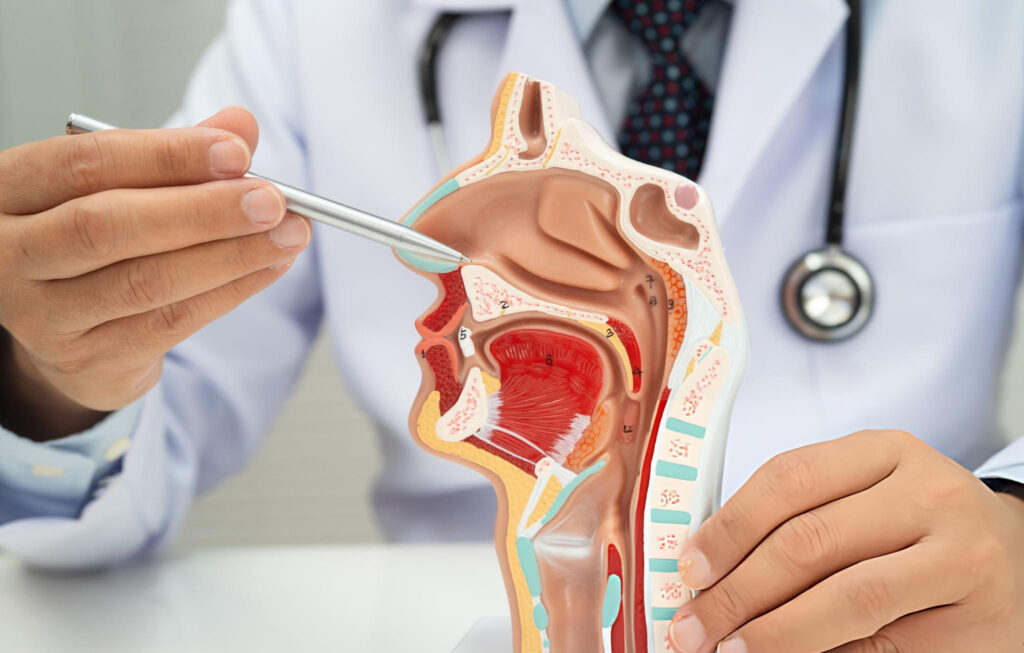
2. Early and Advanced Warning Symptoms
Early symptoms of NPC are notoriously deceptive, often mimicking common colds, rhinitis, or ear infections. Do not ignore the following warning signs:
- Painless Neck Lump: The most common initial symptom. NPC tends to spread early to the cervical lymph nodes. Patients often discover a growing, painless hard lump on the side of their neck while showering or shaving.
- Blood-Tinged Sputum or Nasal Discharge: Especially in the morning, seeing streaks of blood in nasal discharge or in the first phlegm/saliva spit out of the mouth.
- Ear Symptoms (Usually Unilateral): The tumor can block the Eustachian tube (which connects the nasopharynx to the middle ear), causing unilateral hearing loss, ringing in the ear (tinnitus), or a feeling of fullness/fluid in one ear.
- Persistent Nasal Congestion: As the tumor grows, it blocks the nasal airway, usually starting as unilateral stuffiness.
- Neurological Symptoms (Advanced Stage): If the tumor invades upward into the base of the skull and cranial nerves, it can cause severe headaches, facial numbness, difficulty swallowing, or blurred/double vision.
3. Professional Screening and Diagnosis
To accurately diagnose NPC and determine its extent, specialists employ the following tools:
- EBV DNA Blood Test: Measures the levels of EBV antibodies or circulating EBV DNA in the blood. It serves as an excellent early screening tool for high-risk families and is vital for monitoring treatment response and detecting relapses.
- Nasal Endoscopy (Nasoendoscopy): A doctor inserts a thin, flexible tube equipped with a camera through the nostril to visually inspect the nasopharynx for any suspicious growths.
- Biopsy: The gold standard for confirmation. If an abnormality is spotted during the endoscopy, a tiny tissue sample is extracted for pathological analysis.
- MRI and PET-CT Scans: MRI provides extremely detailed images to see if the tumor has invaded the skull base or nerves. A PET-CT scan checks if the cancer has spread (metastasized) to distant organs like the lungs, liver, or bones.
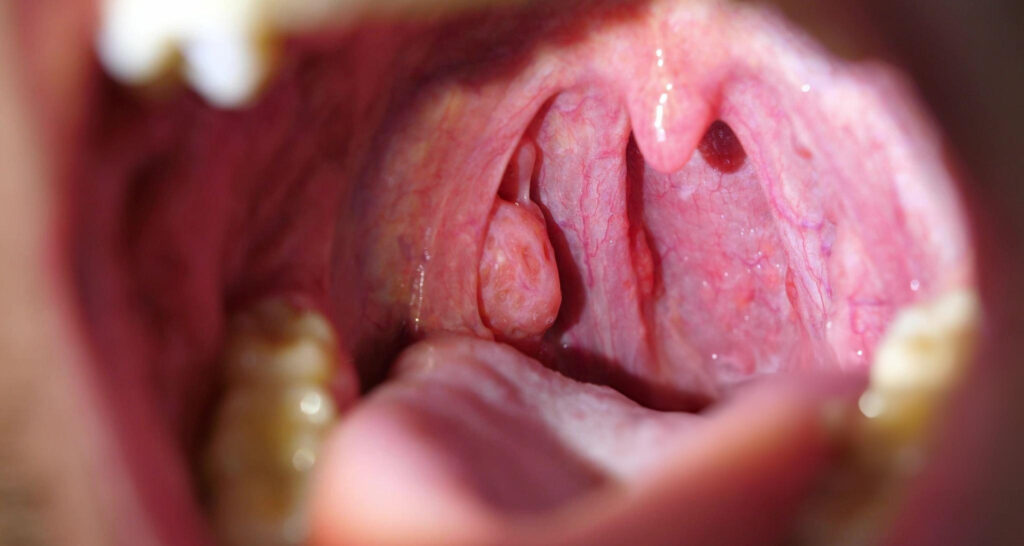
4. Comprehensive Multidisciplinary Treatment
Unlike most solid tumors, surgery is rarely the primary treatment for NPC because of its deep location and surrounding vital structures. Instead, because NPC cells are highly sensitive to radiation, “Radiotherapy” is the cornerstone of a cure:
1. Radiotherapy (Radiation Therapy)
The primary curative treatment for Stages I through IV. Modern techniques like Intensity-Modulated Radiation Therapy (IMRT) or Tomotherapy are used to deliver high doses of radiation precisely to the tumor while maximally sparing healthy nearby tissues (such as salivary glands, the brainstem, and optic nerves), significantly reducing long-term side effects like dry mouth.
2. Chemotherapy
For Stages II to IV, doctors usually recommend Concurrent Chemoradiotherapy (giving chemotherapy alongside radiation). The chemo drugs make the cancer cells more vulnerable to radiation. Chemotherapy may also be given before (induction) or after (adjuvant) radiation to destroy any hidden metastatic cells.
3. Immunotherapy and Targeted Therapy
For advanced NPC that has spread to distant organs or recurred after treatment, Immunotherapy (PD-1 inhibitors) has become an important new standard of care. By re-engaging the patient’s immune system to attack the cancer, it can significantly extend survival.
4. Minimally Invasive Surgery
Surgery is generally reserved for “salvage” procedures if there is a small, localized recurrence in the nasopharynx or neck lymph nodes after initial radiation therapy has been exhausted.
5. Post-Treatment Rehabilitation and Care
- Crucial Pre-Treatment Step: Dental Checkup. Radiation damages salivary glands, leading to chronic dry mouth, which creates a highly susceptible environment for severe tooth decay and even jaw bone necrosis. Patients MUST have a complete dental exam, fix cavities, and extract unsalvageable teeth *before* starting radiation, followed by lifelong meticulous oral hygiene and fluoride treatments.
- Skin and Swallowing Care: The neck skin will react to radiation similarly to a severe sunburn, requiring prescribed ointments. Furthermore, patients must diligently perform swallowing muscle exercises prescribed by speech therapists to prevent long-term difficulty swallowing (dysphagia).
- Screening for High-Risk Individuals: If you have a family history of NPC, consult an oncologist early for regular EBV blood tests and nasal endoscopy screenings to catch any abnormalities early.