






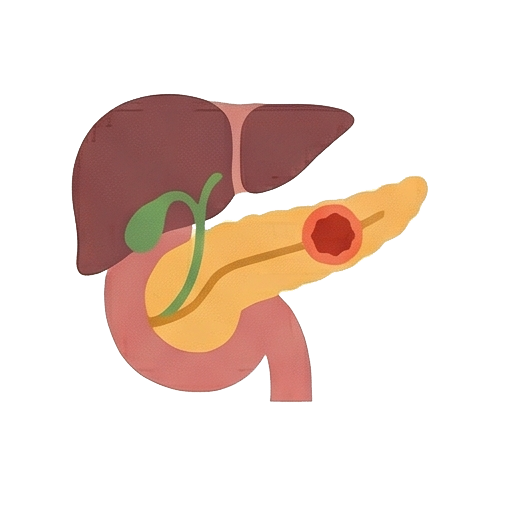
Pancreatic Cancer is widely regarded in the medical community as the “King of Cancers” due to its exceptionally high mortality rate. The pancreas is a long, flat gland situated deep within the abdomen, hidden behind the stomach and in front of the spine. It performs two life-sustaining functions: secreting digestive enzymes to break down food (exocrine function) and producing hormones like insulin to regulate blood sugar (endocrine function).
The danger of pancreatic cancer lies in its stealth. Its deep location means that early, microscopic tumors cannot be felt during routine physical exams or easily seen on standard ultrasounds. Furthermore, the pancreas is surrounded by a dense network of major blood vessels and lymph nodes, allowing cancer cells to spread (metastasize) rapidly to the liver, lungs, or abdominal cavity at a very early stage. Currently, only about 20% of patients are diagnosed early enough for surgical removal, making awareness of risk factors and subtle warning signs absolutely critical for survival.
1. Causes and Major Risk Factors
While the exact cause is not fully understood, medical research has identified several factors that significantly increase the risk:
- Age and Gender: The risk increases with age, with most patients diagnosed after 65. Men have a slightly higher risk than women.
- Smoking: This is the most firmly established modifiable risk factor. Smokers are 2 to 3 times more likely to develop pancreatic cancer than non-smokers.
- Diabetes (Especially Sudden Onset): Long-standing diabetes is a risk factor. More alarmingly, if a healthy middle-aged or older adult suddenly develops diabetes without being overweight or having a family history, it can be a warning sign that a hidden pancreatic tumor is destroying insulin-producing cells.
- Chronic Pancreatitis: Long-term inflammation of the pancreas, often linked to heavy alcohol use or genetic mutations, increases the risk of malignant cellular changes.
- Obesity and Diet: Severe obesity and diets high in fats, processed meats, and calories are linked to increased incidence.
- Genetics and Family History: About 10% of cases are hereditary. Individuals with inherited genetic mutations, such as BRCA1/BRCA2 (also linked to breast/ovarian cancers) or Lynch syndrome, face a notably higher risk.
2. The Hidden Warning Signs
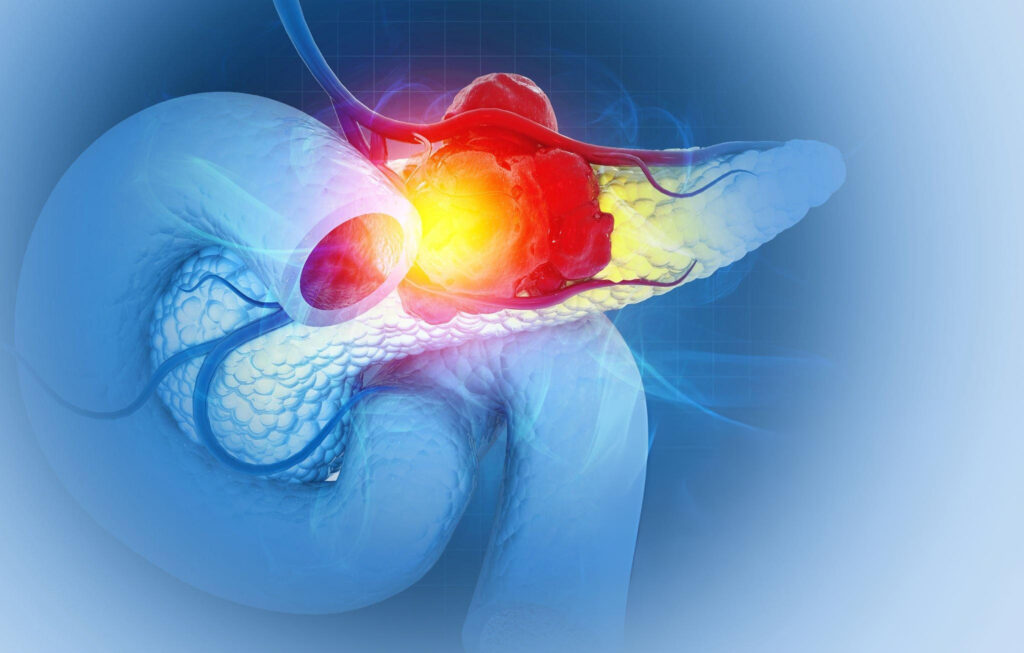
Symptoms vary significantly depending on whether the tumor is located in the “head,” “body,” or “tail” of the pancreas. Be highly alert to the following, especially if they occur together:
- Painless Jaundice (Critical Sign): If the tumor is in the “head” of the pancreas, it can press on the bile duct early on, causing bile to back up. This leads to yellowing of the skin and eyes, dark tea-colored urine, pale/clay-colored stools, and severe full-body itching, usually without significant pain.
- Upper Abdominal Pain Radiating to the Back: Tumors in the body or tail may not cause symptoms until they grow large and press on nerves. This typically presents as a dull, constant ache in the upper abdomen that radiates straight through to the back. It often worsens when lying down and may ease slightly when leaning forward.
- Unexplained Rapid Weight Loss: The tumor consumes the body’s energy, and the lack of digestive enzymes leads to profound loss of appetite, severe indigestion, and rapid weight loss over a few months.
- Steatorrhea (Fatty Stools): Stools that are bulky, pale, floating, unusually oily/greasy, and extremely foul-smelling due to undigested fats passing through the gut.
3. Precision Medical Diagnosis
Standard abdominal ultrasounds are often obscured by stomach gas, making the pancreas invisible. Specialists must rely on advanced imaging:
- Pancreatic Protocol CT Scan: The imaging tool of choice. This specialized, multiphase CT scan utilizes contrast dye to vividly detail the tumor’s size, location, and crucial relationship to major surrounding blood vessels (like the superior mesenteric artery/vein), determining if surgery is possible.
- Endoscopic Ultrasound (EUS) & Biopsy: The most accurate diagnostic tool available. A flexible endoscope with an ultrasound probe is passed down into the stomach, scanning the pancreas from just millimeters away. It can detect tumors smaller than 1cm and allows the doctor to perform a Fine Needle Aspiration (FNA) biopsy with extreme precision.
- MRCP (Magnetic Resonance Cholangiopancreatography): A specialized MRI to visualize the pancreatic and bile ducts to check for blockages.
- Tumor Marker (CA 19-9) Blood Test: CA 19-9 levels are often elevated in pancreatic cancer. While not a definitive diagnostic test alone, it is excellent for monitoring how well the cancer is responding to treatment.

4. Comprehensive Multidisciplinary Treatment
Treating pancreatic cancer is extraordinarily complex and requires a coordinated team of hepato-pancreato-biliary (HPB) surgeons and oncologists:
1. Surgery (The Only Curative Option)
Only about 20% of tumors are localized and resectable at diagnosis. The type of surgery depends on the tumor’s location:
– The Whipple Procedure (Pancreaticoduodenectomy): For tumors in the head of the pancreas. This is one of the most complex and demanding operations in all of surgery. It involves removing the head of the pancreas, the duodenum, the gallbladder, part of the bile duct, and sometimes part of the stomach, followed by intricate reconstruction of the digestive tract.
– Distal Pancreatectomy: For tumors in the body or tail, the tail and body of the pancreas are removed, usually along with the spleen.
2. Chemotherapy
Because pancreatic cancer is highly prone to micro-metastasis (invisible early spread), systemic chemotherapy is a cornerstone of treatment.
– Neoadjuvant Chemotherapy: Given before surgery to shrink borderline-resectable tumors, pulling them away from major blood vessels to make surgery possible.
– Adjuvant Chemotherapy: Essential after surgery to eradicate microscopic remaining cells and delay recurrence.
– Palliative Chemotherapy: The standard of care for advanced/metastatic disease, utilizing powerful combinations to control growth, relieve symptoms, and extend survival.
3. Radiotherapy
Often combined with chemotherapy (chemoradiotherapy) to treat locally advanced tumors that cannot be surgically removed but haven’t spread to distant organs. It is also highly effective at shrinking tumors that are causing severe pain by pressing on spinal nerves.
4. Targeted Therapy and Genetic Testing
Precision medicine is making inroads. If genetic profiling reveals specific inherited mutations (like the BRCA mutation), oncologists can prescribe targeted oral drugs (PARP inhibitors) as maintenance therapy, offering a new lifeline for certain advanced patients.
5. Nutritional Support and Palliative Care
- Enzyme Replacement Therapy: Whether post-surgery or due to the tumor blocking the duct, patients suffer severe digestive insufficiency. They MUST take Pancreatic Enzyme Replacement Therapy (PERT) pills with every meal and snack to digest fats and absorb nutrients, guided by a specialized oncology dietitian.
- Pain Management: Advanced pancreatic cancer often causes debilitating back pain. Beyond strong opioid medications, doctors can perform a Celiac Plexus Block—injecting alcohol or anesthetic directly into the nerve bundle behind the pancreas to dull the pain signals, vastly improving quality of life.
- Quit Smoking: Quitting smoking is the single most effective action a person can take to immediately lower their risk.