






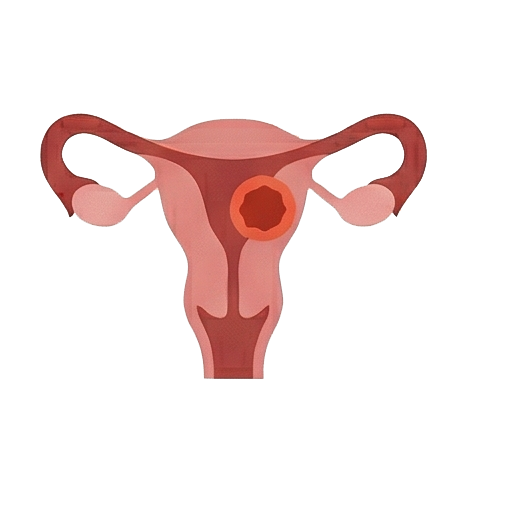
Uterine Cancer (Endometrial Cancer) begins in the layer of cells that form the inner lining (endometrium) of the uterus. Due to increasingly Westernized diets and rising obesity rates, the incidence of endometrial cancer has surged in recent years. It has now surpassed both cervical and ovarian cancers to become the most common gynecological cancer among women in Hong Kong.
Fortunately, endometrial cancer often produces clear warning signs (such as abnormal bleeding) very early in its development. As a result, the vast majority of patients are diagnosed while the cancer is still confined to the uterus. When caught at this early stage, the cancer is highly curable, with the 5-year survival rate for Stage I exceeding 90%.
1. Causes and Major Risk Factors
Endometrial cancer is strongly linked to hormonal imbalance—specifically, having too much estrogen in the body without enough progesterone to balance it out. The following factors significantly elevate this risk:
- Obesity: This is the most significant risk factor. Fat tissue converts certain hormones into estrogen. The more overweight a woman is, the more estrogen her body produces, which overstimulates the uterine lining and increases the risk of malignant mutations.
- Hormonal Imbalance and Reproductive History: Women who have never been pregnant (nulliparity), started menstruating early (before age 12), or went through menopause late (after age 55) endure prolonged lifetime exposure to estrogen. Polycystic Ovary Syndrome (PCOS) also poses a high risk due to chronic hormonal imbalance.
- Estrogen-Only Therapy: Using estrogen replacement therapy during menopause without accompanying progesterone.
- Tamoxifen Use: Women taking Tamoxifen to treat or prevent breast cancer have a slightly increased risk of developing endometrial cancer and require regular gynecological monitoring.
- Diabetes and Hypertension: These conditions are closely associated with obesity and are recognized comorbidities for endometrial cancer.
- Genetics: Families carrying the genetic mutation for Hereditary Nonpolyposis Colorectal Cancer (Lynch Syndrome) have a substantially higher risk of developing endometrial cancer.
2. The Absolute Red Flag: Symptoms to Watch For
Endometrial cancer usually presents early. Women, especially those approaching or past menopause, must never ignore these signs:
- Post-Menopausal Bleeding (The Ultimate Red Flag): This is the classic symptom. ANY vaginal bleeding or spotting that occurs after a woman has gone through menopause is highly abnormal. It is not the return of youth; it requires immediate medical investigation to rule out cancer.
- Abnormal Bleeding in Pre-Menopausal Women: Suddenly experiencing exceptionally heavy periods, periods lasting much longer than usual, or bleeding/spotting between periods.
- Unusual Vaginal Discharge: Watery, blood-tinged discharge, sometimes accompanied by a foul odor.
- Advanced Symptoms: Persistent pelvic or lower abdominal pain, pain during intercourse, difficulty urinating, or a palpable mass in the lower abdomen.
3. Professional Medical Diagnosis
Routine Pap smears are designed to detect cervical cancer and are extremely poor at diagnosing endometrial cancer. If symptoms arise, specialists utilize specific diagnostic tools:
- Pelvic Ultrasound: Often performed transvaginally, this allows the doctor to measure the thickness of the endometrium. A thickened lining in a post-menopausal woman is highly suspicious.
- Endometrial Biopsy (Pipelle): A very thin, flexible tube is inserted into the uterus in the clinic to suction out a small sample of the endometrial tissue for laboratory analysis.
- Hysteroscopy and D&C: The gold standard for diagnosis. The doctor inserts a tiny camera (hysteroscope) into the uterus to visually inspect the lining and performs a Dilation and Curettage (D&C) to thoroughly scrape tissue for pathology.
- Imaging Scans (MRI / PET-CT): Once confirmed, an MRI of the pelvis is crucial to see how deeply the tumor has invaded the uterine muscle. A PET scan may be used to check if lymph nodes are affected.
4. Comprehensive Multidisciplinary Treatment
Surgery is the cornerstone of treating endometrial cancer, often followed by adjuvant therapies depending on the risk of recurrence:
1. Minimally Invasive Surgery
The standard curative procedure is a Total Hysterectomy with Bilateral Salpingo-Oophorectomy (removal of the uterus, cervix, both fallopian tubes, and both ovaries), often alongside pelvic lymph node removal. Today, this is predominantly performed via Laparoscopic or Robotic-Assisted Surgery, ensuring small incisions, less pain, and rapid recovery.
2. Fertility-Sparing Treatment for Young Women
For young women diagnosed with very early, low-grade endometrial cancer who strongly desire to preserve their fertility, surgery may be temporarily delayed. High-dose progestin therapy (oral pills or a hormonal IUD) can be used to reverse the cancer. Once the patient has successfully given birth, standard surgical removal is usually recommended to prevent a recurrence.
3. Radiotherapy (Radiation Therapy)
Used post-operatively to eradicate any microscopic cancer cells and reduce the risk of local recurrence.
– Vaginal Vault Brachytherapy: A radioactive cylinder is placed briefly inside the vagina to deliver targeted radiation with very few side effects.
– External Beam Radiation Therapy (EBRT): Used if the cancer has invaded deeply into the uterine muscle or if there is a higher risk of pelvic recurrence.
4. Chemotherapy, Hormone & Immunotherapy (Advanced Stage)
Systemic chemotherapy is the main treatment for advanced or metastatic disease. If the tumor is hormone-receptor-positive, hormonal drugs can help control growth. Recently, combinations of Immunotherapy and Targeted Therapy have achieved breakthrough results for advanced patients whose tumors exhibit specific mismatch repair deficiencies (dMMR/MSI-H).
5. Prevention and Health Management
- Weight Management: The most effective way to prevent endometrial cancer is to maintain a healthy Body Mass Index (BMI) through a balanced diet and regular exercise, which prevents the overproduction of estrogen by fat cells.
- Manage Chronic Conditions: Keep diabetes, hypertension, and PCOS under strict medical control.
- Act on Abnormal Bleeding: Women of all ages—but especially those post-menopause—must consult a gynecologist for a pelvic ultrasound immediately if they experience unexplained bleeding.