






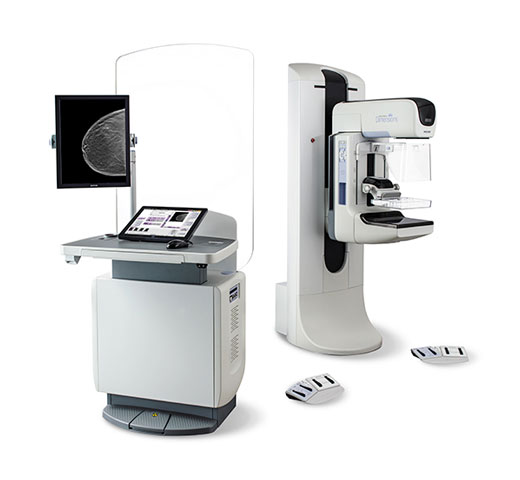
What is Breast Cancer Screening?
Mammography is the only screening tool medically proven and globally recognized to effectively reduce breast cancer mortality. Whether utilizing traditional 2D or advanced 3D technology, the core strength of mammography lies in its ability to detect tiny, unpalpable tumors and “microcalcifications”—often the only early sign of breast cancer. Early detection and treatment can lead to a survival rate of over 90%.
- Standard 2D Mammography: This remains the most widely used standard screening method. The machine takes images from two angles (top-to-bottom and side-to-side) while compressing the breast, producing a single, high-resolution flat image. For women with a higher percentage of fatty tissue and less dense breasts, 2D mammography provides highly reliable and valuable diagnostic results.
- Advanced 3D Tomosynthesis: A significant breakthrough built upon 2D technology. During the scan, the X-ray tube moves in a gentle arc, capturing multiple images from various angles. A computer then reconstructs these into 1-millimeter-thin 3D slices. Radiologists can examine the breast layer by layer (like flipping pages in a book), which eliminates the issue of overlapping tissues hiding tumors. This is particularly beneficial for Asian women who commonly have dense breast tissue.
Comparison: 2D vs. 3D Mammography
| Features | Conventional 2D Mammography | 3D Mammography (Tomosynthesis) |
|---|---|---|
| Image Visualization | Single flat plane (Top-to-bottom and side views) | Multiple angles, reconstructed into 1mm thin 3D slices |
| Tissue Overlap Issues | Significant. May hide tumors or create false lesions | Minimal. Layer-by-layer view eliminates overlapping structures |
| Early Cancer Detection Rate | Standard | Significantly higher (Detects up to 40% more invasive cancers) |
| False Positive / Call-back Rate | Higher, often requiring additional imaging | Reduced by 15% – 40%, minimizing patient anxiety |
| Best for “Dense Breasts” | Less effective, diagnosis can be limited | Excellent. The gold standard for Asian women and dense tissue |
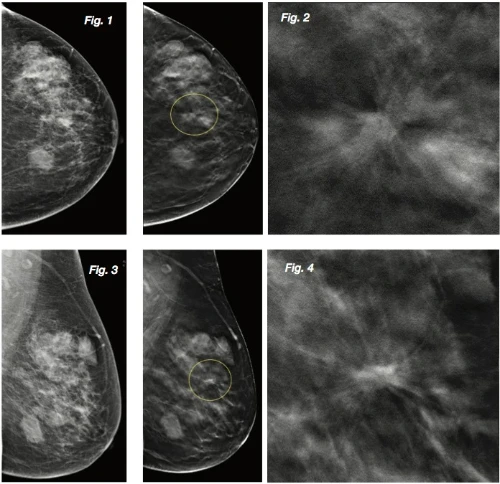
Who Should Be Screened & High-Risk Factors
We strongly recommend that women aged 40 and above undergo a routine screening mammogram every 1 to 2 years. If you have any of the following “high-risk factors,” consult your doctor about starting screenings earlier, typically at age 35:
- A first-degree relative (mother, sister, or daughter) diagnosed with breast or ovarian cancer.
- Known BRCA1 or BRCA2 genetic mutations.
- A personal history of atypical hyperplasia or ductal carcinoma in situ (DCIS).
- Nulliparity (never having given birth) or having your first child after age 35.
- Early onset of menstruation (before age 12) or late menopause (after age 55).
Preparation & Helpful Tips:
- Best Time to Book: To minimize discomfort from compression, schedule your appointment for the 7th to 10th day after your menstrual period begins, when your breasts are least tender and swollen.
- What to Avoid: Do not apply deodorant, antiperspirant, talcum powder, or lotions under your arms or on your breasts on the day of the exam. The metallic particles in these products can appear as white spots on the X-ray, mimicking cancer-indicating microcalcifications.
- Clothing: You will need to undress from the waist up. It is highly recommended to wear a two-piece outfit (a top with pants or a skirt) rather than a dress for your convenience.
- Bring Previous Records: If you have had mammograms at other clinics, please bring the physical films and reports with you. Comparing current images with past ones is crucial for the radiologist to detect subtle changes.
Does breast compression hurt?
Pain tolerance varies, but most women experience temporary discomfort or pressure. Firm compression is essential for several reasons: it flattens the breast to prevent tissue overlap (uncovering hidden tumors), reduces tissue thickness (significantly lowering the radiation dose required), and holds the breast completely still to prevent blurry images. Our advanced 3D systems use ergonomically curved paddles that distribute pressure evenly, making the procedure much more comfortable than older machines.
What are "dense breasts," and why do they need 3D imaging?
Breasts are composed of fat and glandular tissue. If you have more glandular tissue than fat, you have “dense breasts,” which is very common among Asian women. On a 2D X-ray, both dense tissue and tumors appear “white.” Looking for a tumor in a dense breast is often compared to looking for a snowball in a snowstorm. 3D tomosynthesis solves this by slicing through the tissue layer by layer, preventing the white dense tissue from masking underlying tumors.
Can I get a mammogram if I have breast implants?
Absolutely, and it is just as important! Please inform our staff about your implants (silicone or saline) when booking. Our specially trained radiographers will use a technique called “Implant Displaced Views.” They will gently push the implant back against the chest wall and pull the natural breast tissue forward to compress and image it. This ensures the implant remains safe while the breast tissue is thoroughly examined.
If my report shows "microcalcifications," does that mean I have cancer?
Not necessarily. Microcalcifications are tiny specks of calcium deposits in the breast tissue. The vast majority (over 80%) are completely benign, caused by natural aging, past trauma, or benign cysts. However, certain shapes or tight clusters of calcifications can be an early sign of precancerous changes. Depending on their appearance, your doctor may recommend follow-up monitoring or a biopsy for definitive confirmation.
I already had a breast ultrasound. Why does the doctor want me to do a mammogram too? Can one replace the other?
They cannot replace each other; they are complementary. Ultrasound is excellent at distinguishing solid lumps from fluid-filled cysts without radiation. However, ultrasound is very poor at detecting “microcalcifications,” which are often the very first and only sign of early-stage breast cancer. Mammography is the gold standard for finding these calcifications. For women over 40, using both methods together provides the most comprehensive and accurate screening.
Is the radiation from a mammogram safe? Could it cause cancer?
It is extremely safe. Modern digital mammography utilizes a very low dose of radiation. The dose for a standard two-view bilateral mammogram is about 0.4 millisieverts (mSv), which is roughly equivalent to the natural background radiation you absorb from your environment over 7 weeks, or the exposure during a long-haul flight. The risk of harm is almost negligible, while the life-saving benefits of early breast cancer detection are immense.
Can I have a mammogram if I am pregnant or breastfeeding?
If you are pregnant or suspect you might be, you should NOT have a mammogram due to potential radiation risks to the fetus; consult your doctor about a breast ultrasound instead. If you are breastfeeding, mammograms are safe, but your breasts will be filled with milk, making the tissue extremely dense and the images very difficult to read accurately. It is generally recommended to wait at least 3 months after you have completely stopped nursing to have a screening mammogram.