



Personalising medication decisions through genetics
People with the same diagnosis may respond differently to the same medication. Age, height, weight, other medical conditions, current medicines and genetics can all influence efficacy and side effect risk.
Pharmacogenomic testing analyses variants related to drug-metabolising enzymes, transport proteins and drug targets. Results can help doctors assess whether standard dosing is appropriate, whether dosage adjustment may be needed, or whether another treatment option should be considered. Results should support clinical discussion and should not be used to start, stop or change medication without medical advice.

What Precision Medication Means
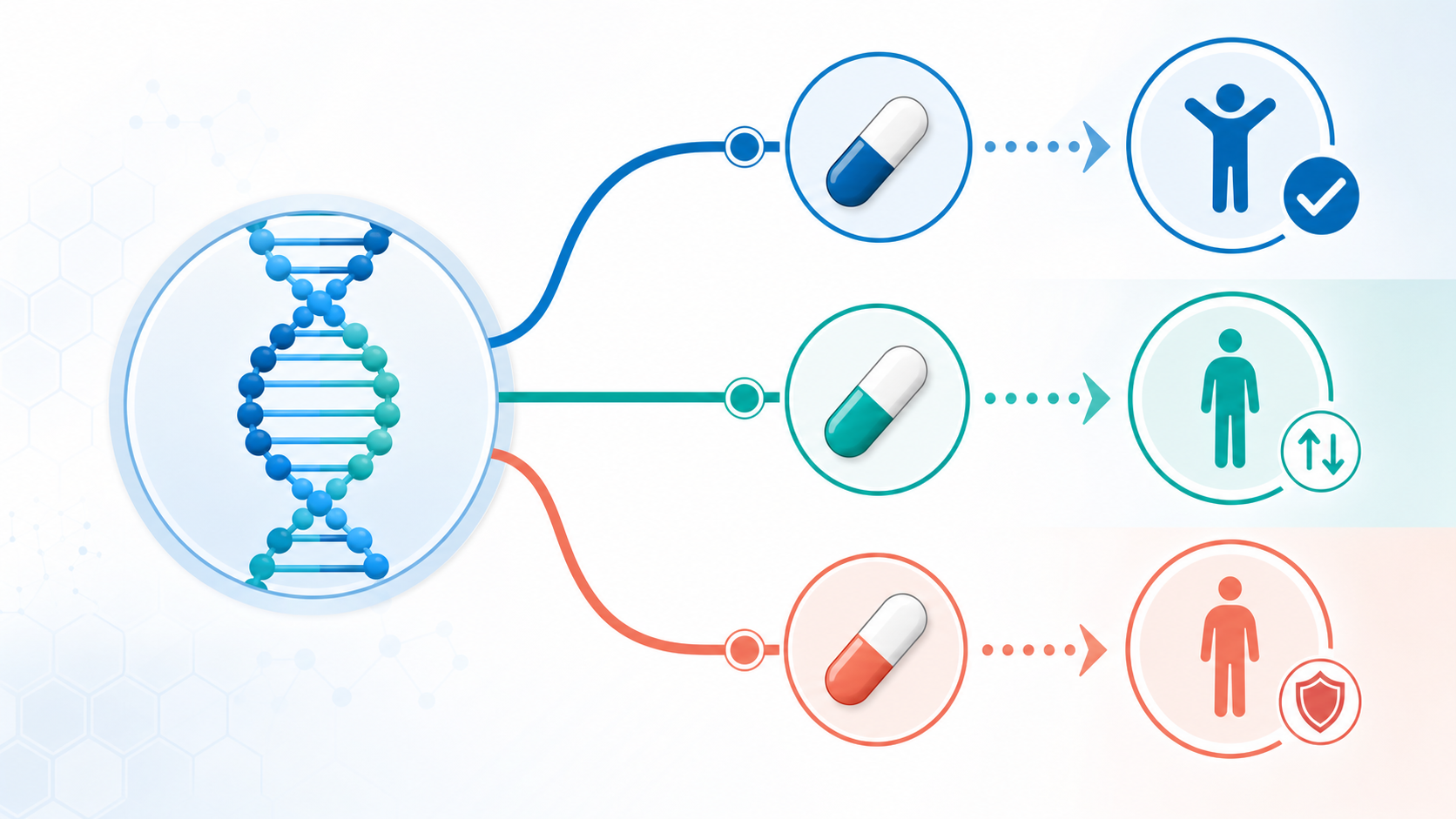
Traditional prescribing may involve repeated trials, switching medicines and adjusting dosage based on experience. Medicines may cause side effects or may not work as expected. Precision medication adds pharmacogenomic information, aiming to treat both the condition and the genes, reduce side effects, avoid ineffective treatment and support more suitable medication and dosing choices.
A Hong Kong Chinese study found that nearly all ethnic Chinese in Hong Kong (99.6%) carry at least one genetic variant that may affect drug response. Genetic variations can alter drug metabolism, transport proteins or drug targets, leading to differences in drug response.
Testing Areas
- Psychiatry pharmacogenomic testing covers CYP2C9, CYP2C19, CYP2D6, HLA-A and HLA-B, providing recommendations for 27 psychiatric medicines; report turnaround is generally around 4-6 weeks.
- Psychiatry medication categories include antiepileptics, atypical and typical antipsychotics, S1P receptor modulators, benzodiazepines, SSRIs, SNRIs, tricyclic antidepressants and norepinephrine reuptake inhibitors.
- Cardio-haematology pharmacogenomic testing covers F5, CYP2D6, G6PD, CYP2C9, CYP4F2, VKORC1, CYP2C19 and SLCO1B1, involving 199 pharmacogenomic variants and supporting recommendations across 12 cardiovascular and haematology conditions.
- Medication categories include anticoagulants, antiarrhythmics, cholesterol-lowering medicines, platelet production medicines, antiplatelets, angina treatment and antihypertensives.
- Technical information indicates DNA sequencing 99.9%, SNP / indel variant calling >99%, and GenQA / UK NEQAS external quality assurance; variant classification may change as medical knowledge develops.
Enquire or Book
Contact the Well Clinic team to discuss whether this test may be suitable for you or your family.
Contact Us
WhatsApp / WeChat: +852 5292 0089
Address: Room B, 24/F, Lee Tung Building, 9 Li Yuen Street East, Central, Hong Kong